Four methods, four ways to control the bait
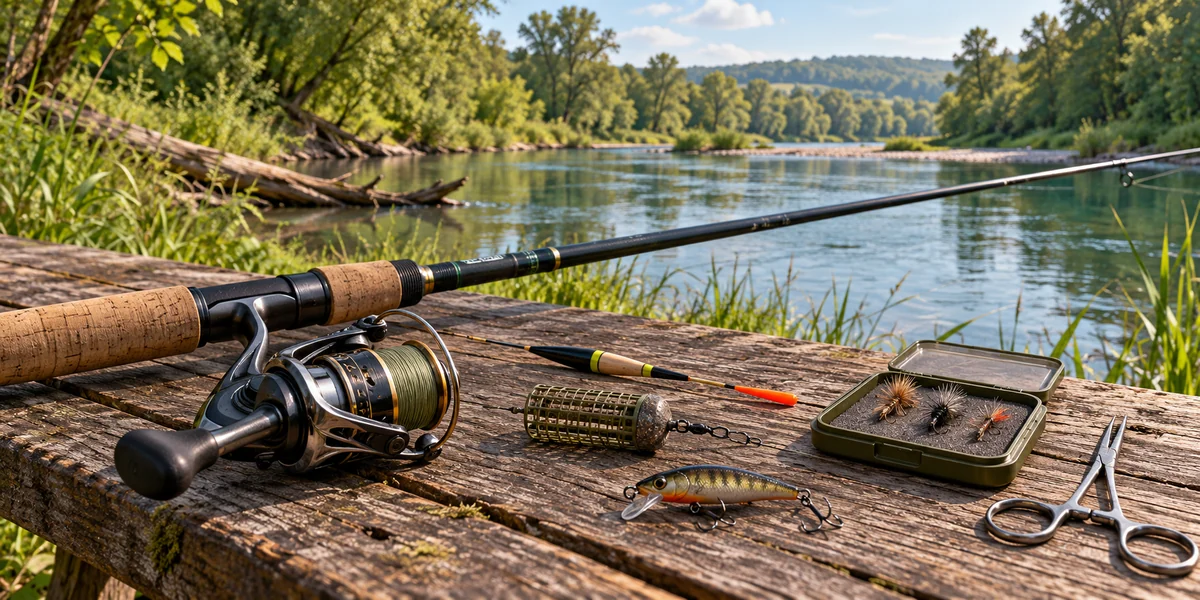
Choose a method to suit the water, access, target fish and rules. A float, feeder, lure and artificial fly solve different tasks. Understanding where the bait is and how contact is indicated matters more initially than carrying several rods.
Float fishing: a visible surface signal
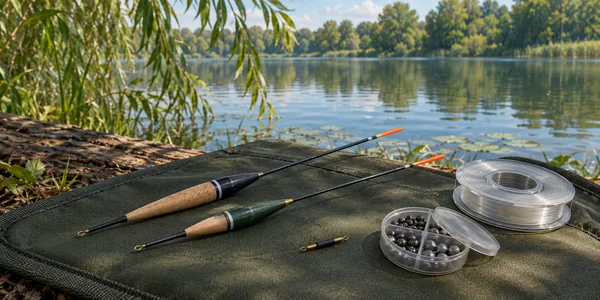
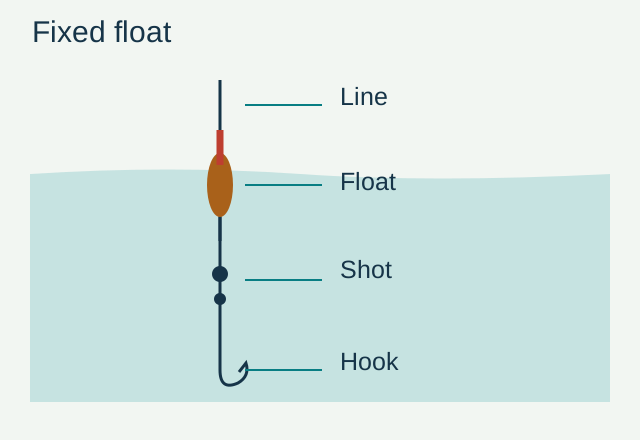
A float supports part of the load and shows changes on the line. Shot loads it and affects how the bait sinks. On a simple fixed rig, moving the float changes the distance to the hook. Current, bottom contact and line tension also affect the actual bait position.
Feeder fishing: feed and bait near the bottom
The feeder delivers groundbait to a chosen area, while a sensitive rod tip indicates changes in line tension. This differs from suspending bait beneath a float. Match the feeder’s shape and total loaded weight to the flow, depth and rod rating.
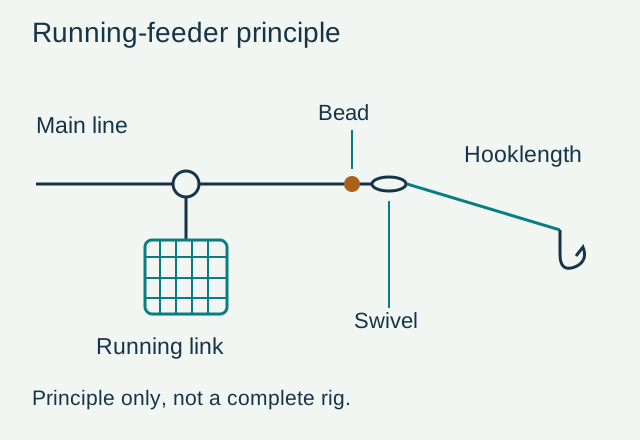
This is not a finished recipe for every water. An experienced angler should check component compatibility, tangles and whether a fish could be left towing a trapped feeder after a break. Do not add arbitrary stops or knots above it.
Lure fishing: movement creates the presentation
Cast an artificial lure and retrieve it through the water. Its construction, retrieval speed, rod position and sinking time affect its path. Learn to control one straightforward lure first. Notice bottom contact and snags rather than only turning the handle.
Toothy predators require a suitable bite-resistant trace and appropriate unhooking equipment. Get practical instruction before targeting pike; thin line and short forceps do not replace handling skills.
Fly fishing: casting the weight of the line
In a conventional fly cast, the weight of the fly line carries the light artificial fly. A leader connects it to the fly. Rod, line and fly form a matched system, rather than an ordinary reel with differently coloured nylon. Practise with instruction in clear space, away from people.
Test the knot before testing your luck
For suitable monofilament and an eyed hook, an improved clinch is one introductory option. Pass the tag through the eye, wrap it around the standing line, return through the small loop by the eye and then through the new larger loop. Wet with water, tighten gradually and inspect the turns. The RBFF source provides illustrated steps; check the turns and suitability for your material.
Do not assume the same knot suits every braid or diameter. Apply controlled tension with the hook shielded before fishing. Cut back damaged or distorted line and retie. No universal strength percentage is claimed.
Change one thing at a time
Changing the method, depth, bait and location together makes the result hard to interpret. Choose a change you can track and record it. Continue with reading the water and bait and presentation.