What is feeder fishing, and what does the tip show?
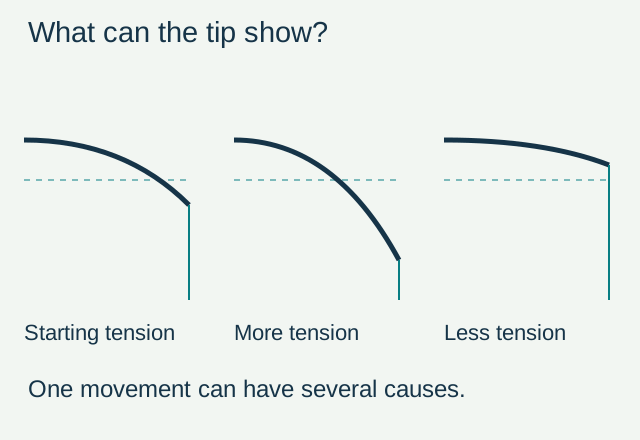
Feeder fishing delivers loose feed close to a hookbait using a feeder on the line. The sensitive quivertip shows changes in line tension. A fish taking the bait can cause movement, but so can wind, current, weed on the line or a shifting feeder. Start by recognising the resting position rather than striking at every tremor.
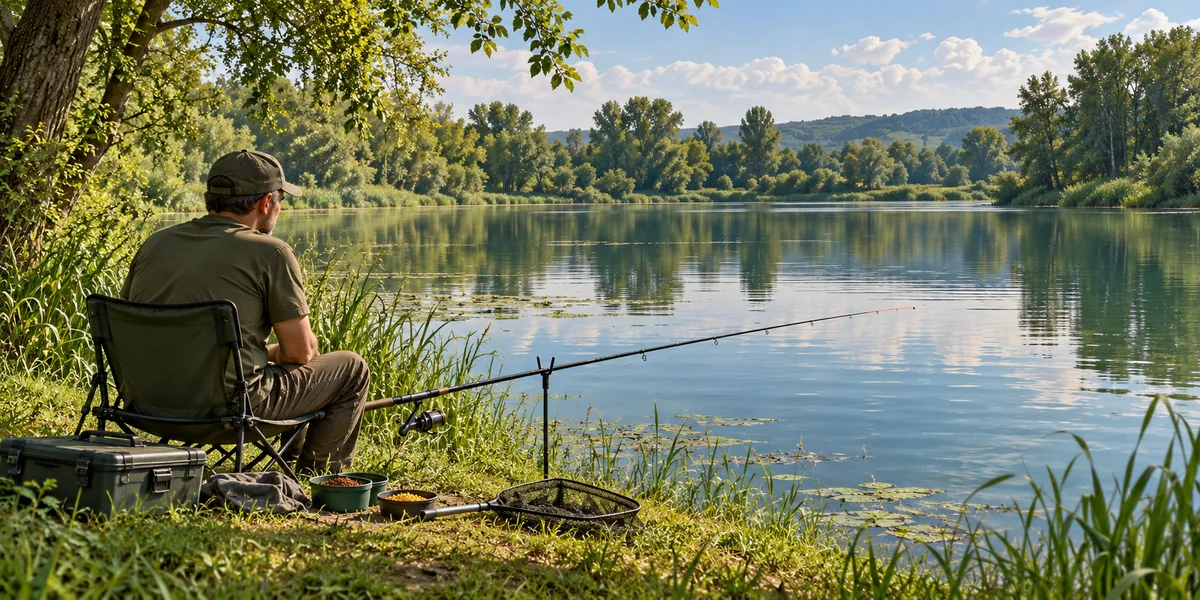
Make the first session manageable: an accessible bank, clear space behind you and calmer water within a distance you can reach repeatedly. A large river with strong flow requires different loading and line control. You do not need to learn long casting, feeding and holding bottom in powerful current at the same time.
Match the rod, feeder and rig first
Read the rod’s rating and manufacturer instructions. Consider the loaded feeder, including its contents, rather than just the weight stamped on the empty feeder. A replaceable tip’s sensitivity rating is different from the rod’s casting-load rating. Tips from different ranges are not automatically interchangeable either: check compatibility with your particular rod.
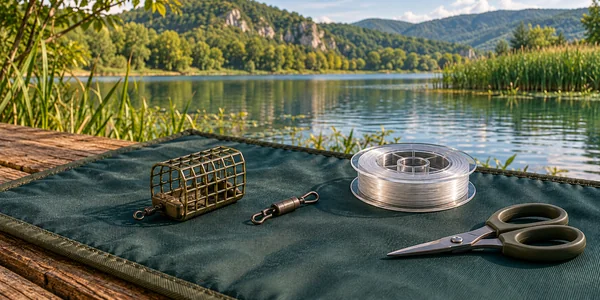
Learn to assemble one rig neatly before trying another. Our running-feeder guide is a useful next step in this series. An inline method feeder places the feed and hooklength differently, so learn that arrangement separately. With a kit, check which connectors and hooklengths belong to it.
Prepare before the first cast
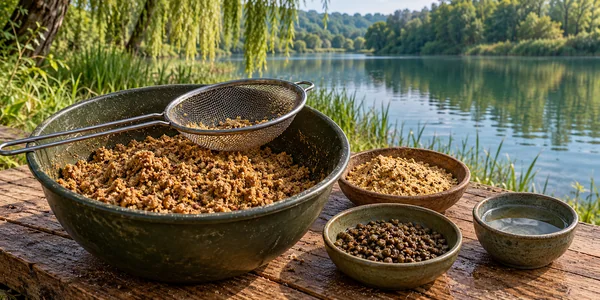
Besides rod and reel, bring suitable line, a feeder, a checked hooklength and hook, a stable rest, unhooking tools and a landing net. Prepare the landing area before starting. A mixing bowl, water for preparing feed and a few spare hooklengths are more useful to a beginner than many additives whose effects cannot be compared.
Seat the rod sections, align the guides and thread every guide. Check that line is not wrapped around the tip before casting. Put sharp items and feed where you can reach them without searching while holding a fish. Check the particular Croatian water’s permit, bait and rod-number rules; a foreign competition setup does not establish local permission.
Choose a spot you can reach again
Pick a clear far-bank marker and a manageable distance. Controlled, repeatable casts are more useful than one exceptional long cast. Check the space before swinging and control the cast without an abrupt shock. If you cannot yet control it, practise without a hook in a suitable clear area.
Once the feeder has settled, place the rod on the rest and gently remove excess slack. Do not tighten so much that you drag the feeder away. Watch the starting tip position and distinguish repeating wind movement from a new change. This is easier in calm water than in flow constantly pushing against the line.
Learn from one session
Record your casting spot, feeder type, feed condition and what comes back when you retrieve. An empty hook, a tangled hooklength and hard feed still lodged inside the feeder call for different responses. Change one thing and compare subsequent casts. A quiet spell is not, by itself, a reason to introduce more feed.
Feed staying in the feeder? Start with groundbait preparation. If the rig comes back tidy and you want to target bream, move to the bream guide. Give yourself one clear problem to work on next time.