Groundbait and hookbait have different jobs
Hookbait is presented beside the hook; loose feed is introduced to attract or hold fish. You can use the same ingredient on the hook or introduce it separately as feed. With a feeder, you must also control delivery to the bottom and release from the feeder. An appealing smell on the bank does not tell you whether the mixture remains a hard plug underwater.
Start with one mix and a small, repeatable preparation routine. Record dry feed and water quantities, using the same container for comparisons. There is no need to mix the entire bag. Keeping some feed dry allows another trial if the first batch becomes too wet, and a small batch limits the consequences of an initial mistake.
Add water gradually
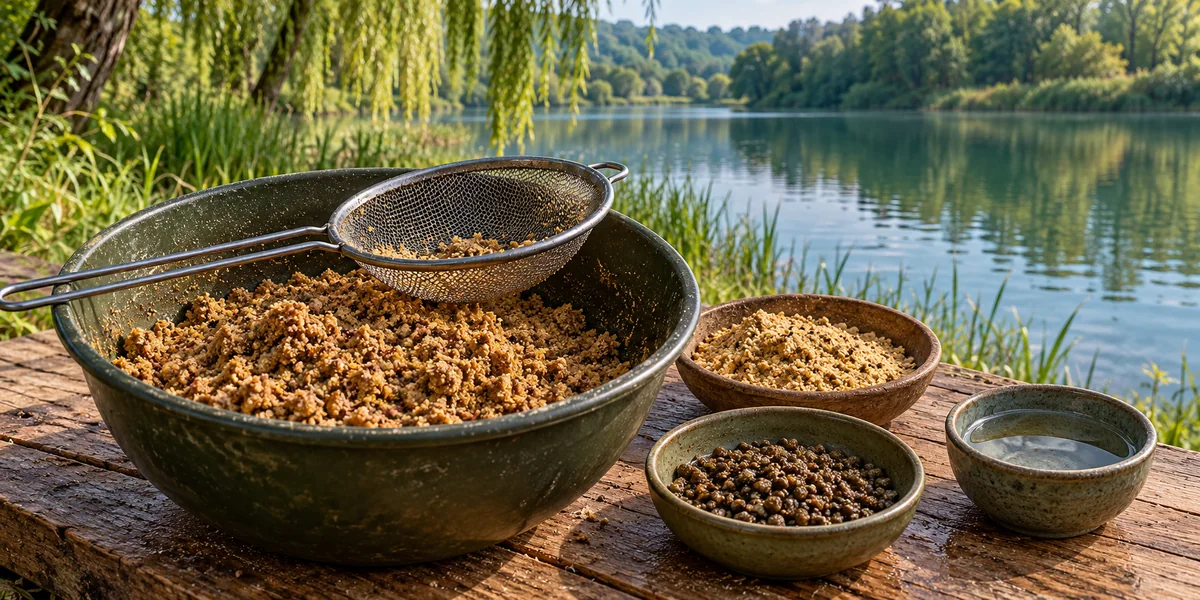
Add water in small stages, mixing evenly around the bowl’s edges and bottom each time. Allow absorption before assessing the result. Guru’s demonstration gives around 20 to 30 minutes of resting. That describes its example; formulations, temperature and product instructions can require a different approach.
Check the mixture again after absorption. Riddling helps break up lumps and even out texture. Keep the bowl covered or protected from drying. Do not judge it only once at home: wind, sunshine and added ingredients can change the feed you actually use during the session.
Pellets are not crumb groundbait
Prepare pellets separately according to the chosen product. Soaking, draining and resting are different actions. More time submerged is not automatically better, and instructions for 2 mm micro pellets do not transfer unchecked to larger pellets with a different formulation. Understand their individual behaviour before comparing their addition to a groundbait mix.
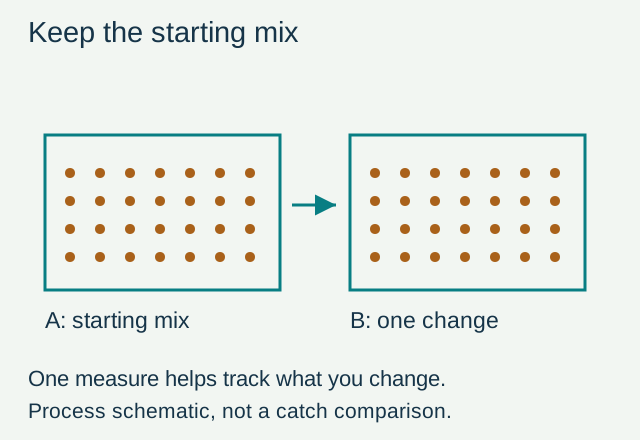
Set aside a second small batch and change only what you want to compare. Using the same measuring cup, as Dean Barlow does in his example, makes a mix easier to repeat. Guessing quantities in different containers makes it harder to return to a batch you liked.
Test in a container before testing with fish
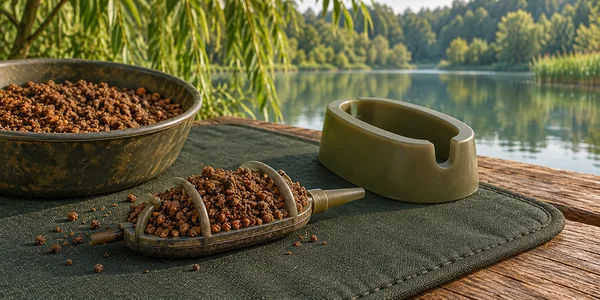
- Fill the same feeder as you intend to use it when casting. Record any change in packing pressure.
- Lower it into a clear container of water and watch whether feed begins to separate.
- Observe whether it stays a closed block or releases particles. Retrieve and inspect what remains.
- Change just one factor in a fresh small batch, such as hydration or packing pressure, and repeat the comparison.
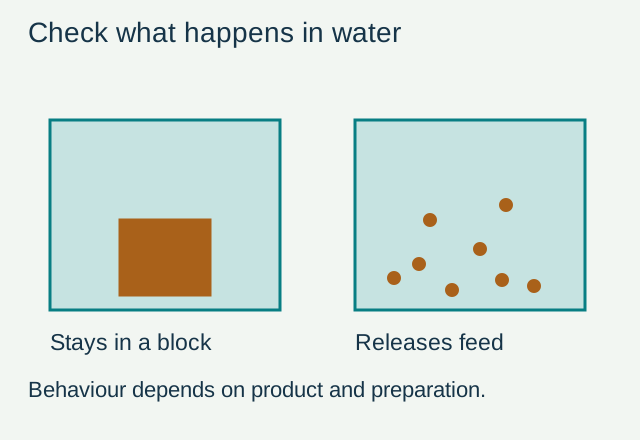
A container test quickly reveals an obvious problem: feed falls apart immediately or stays as a hard plug. Depth and current will change its behaviour at the swim, so inspect the feeder after retrieving as well. Start by checking whether the feed releases at all and how your two batches differ.
When feed falls out or stays inside
If a portion collapses during handling, inspect hydration, absorption and loading before trying a harder cast. If it remains compact in repeated tests, compare gentler loading or different preparation in a fresh batch. Changing flavour, feeder and swim together prevents you from identifying which adjustment mattered.
During a quiet spell, check that feed is releasing and the hookbait stays in place before introducing another portion. More food will not untangle a hooklength. Take leftovers home and leave the bank clean. Continue with bream on the feeder to put the preparation into a session.