Bait is only part of the presentation
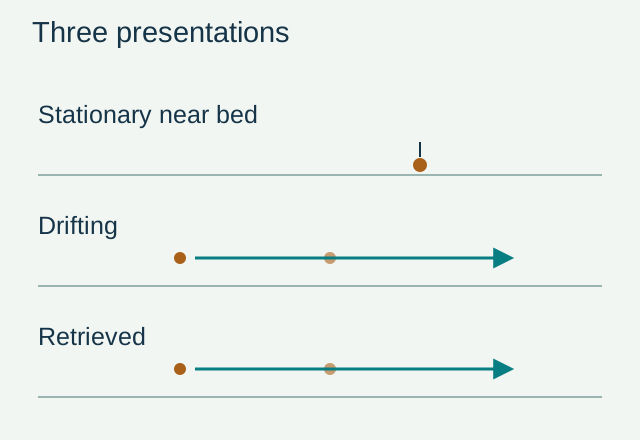
Before asking “which bait?”, ask where you want to offer it: near the bed, midwater or at the surface? Will it remain still, drift or move through retrieval? A suitable bait you cannot control is not the same as a useful presentation.
Separate hookbait from groundbait
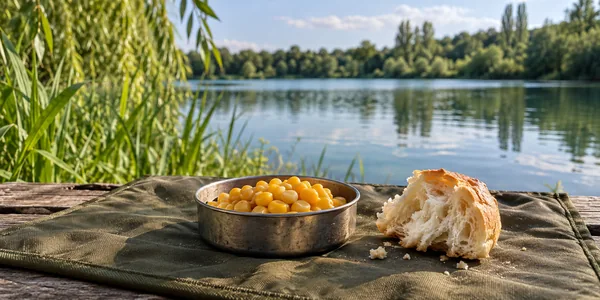
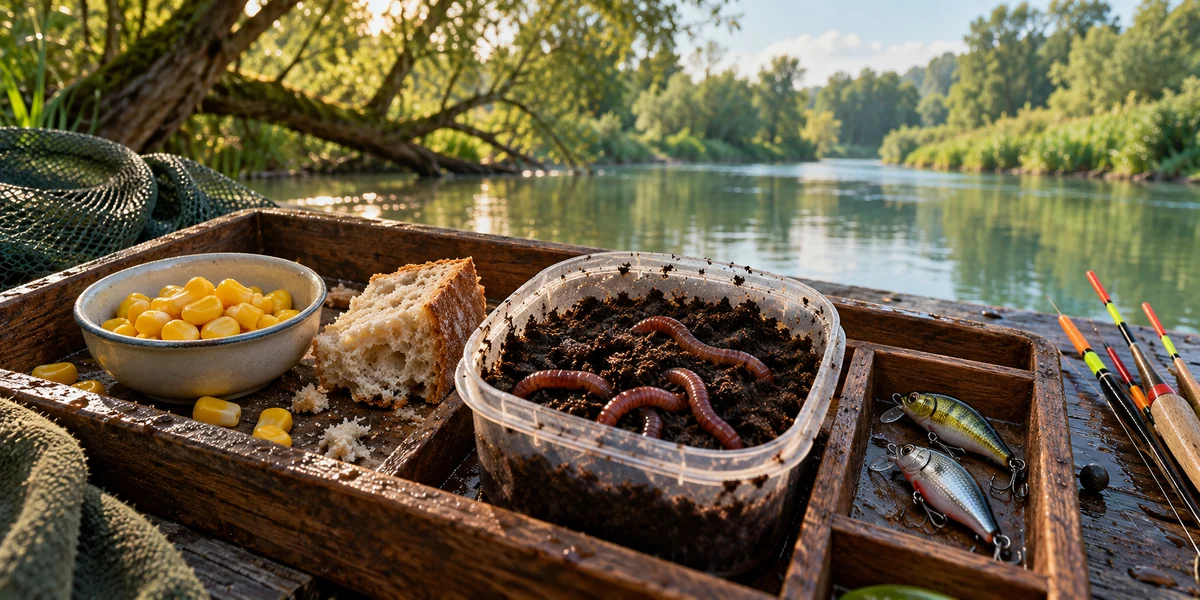
Hookbait is the item offered with the hook. Groundbait attracts or holds fish in an area. Corn, bread, worms and maggots are examples of possible natural baits, not a ranking for every water. Check local permission and use restrictions; live fish and moving live organisms between waters need particular attention to the rules.
Keep feeding controlled. Adding food does not replace locating fish. During hot conditions especially, decomposition of uneaten organic material can add pressure to the water. First consider whether fishing is appropriate at all.
Diet helps you ask a question
Finding a food item in a fish’s gut establishes consumption under the study conditions. It does not demonstrate that the same food on a hook, or an imitation, produces more catches. That requires a fishing comparison accounting for effort and blank trips.
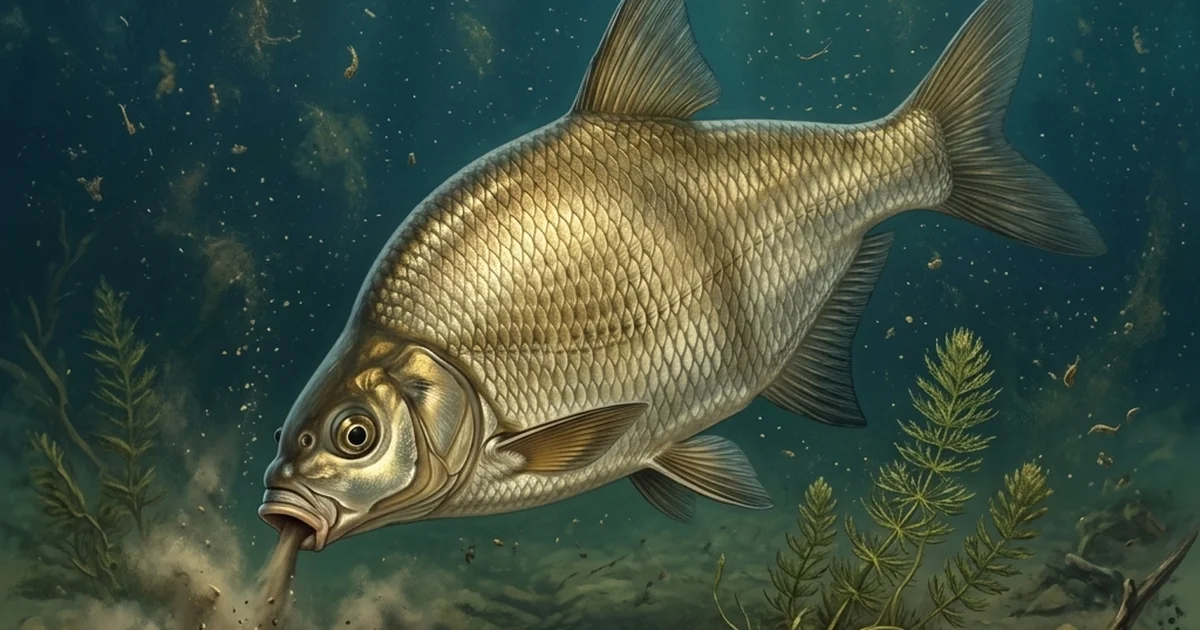
For common bream, explore bottom feeding and filtration; for grass carp, consider diet at different life stages. Neither gives a universal “corn always wins” rule or the same feeding quantity for every water.
Watch how a lure behaves
Observe one lure in visible water beside a safe bank. Do you understand its working speed, sinking behaviour and what a pause does? No colour removes poor depth control or snagging. Zander vision research is not a catch-rate test of fluorescent lures.
Match hook, bait and hooklength so they work together for the intended fish. If the bait falls apart, is mounted poorly or the rig keeps tangling, solve that problem first. A different flavour is not necessarily the answer.
A small comparison on your own water
- Choose a permitted method and a familiar place.
- Record effort, conditions and the starting presentation.
- Change one variable, such as depth or retrieval speed.
- Repeat across outings, including blank trips.
- Describe the result as an observation under your conditions, not a rule for the whole species.
One successful trip can be chance. Notes support learning rather than proving a favourite bait was best all along. For choosing the method, return to methods and rigs.