Which grass carp bait should I try first?
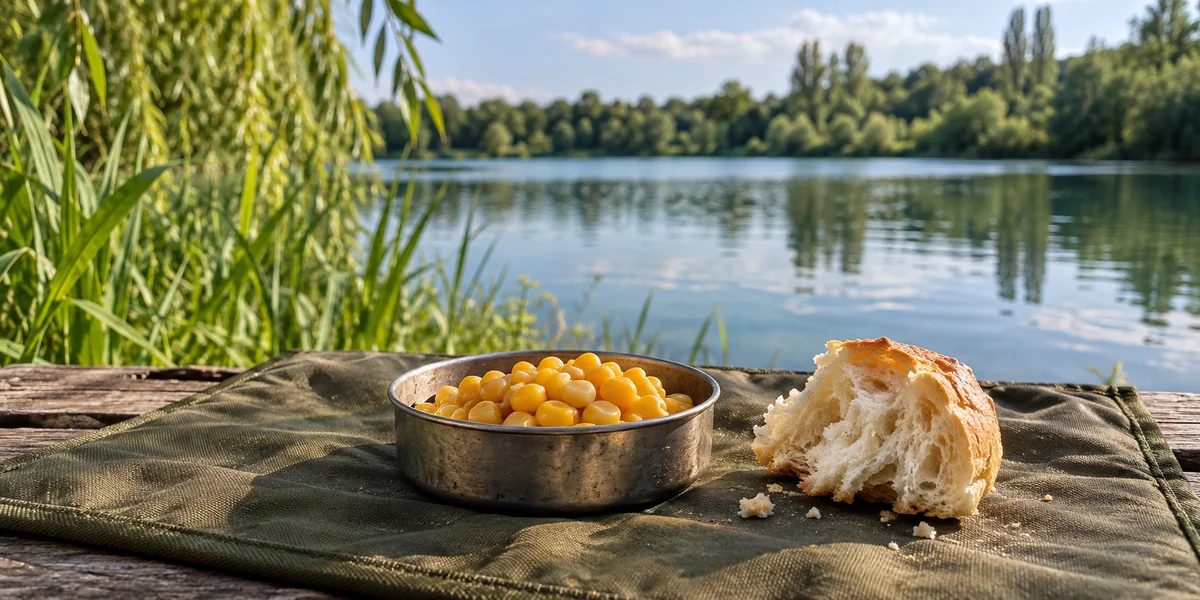
For a first attempt near the bed, we suggest ready-cooked corn. Bread makes sense when you can see grass carp taking it at the surface. Bring both, then choose your presentation from what you observe. A fish cruising below the surface is not necessarily feeding.
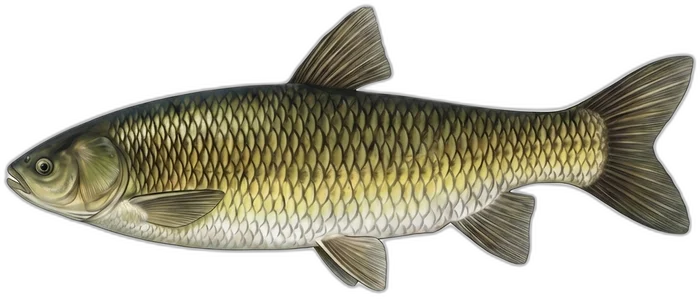
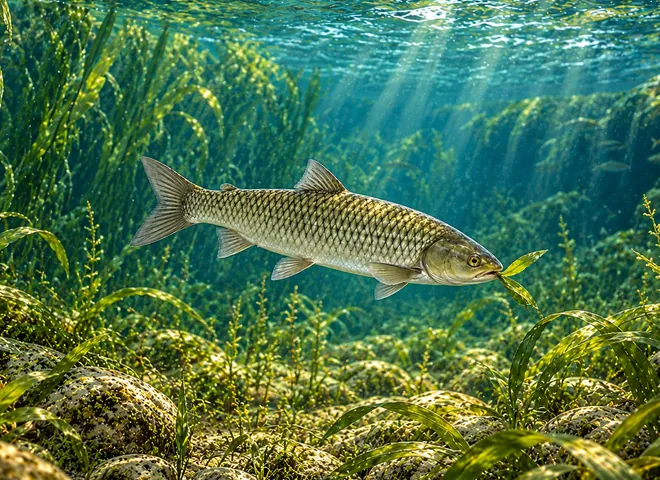
Adult grass carp feed mainly on aquatic plants and also accept prepared feeds in aquaculture. Their diet tells you more than a flavour name on a packet, but does not establish which hookbait will work best on your water.
Find the fish and a place to land it
Before unpacking, look over shallow bays and vegetation edges. Approach quietly and keep some distance from the fish. Find a clear route for playing a fish and somewhere you can safely lower the landing net. If a hooked fish would immediately reach branches or thick weed, choose another position before feeding.
For your first session, choose one accessible spot you can watch. That makes changes easier to follow than feeding several distant positions at once.
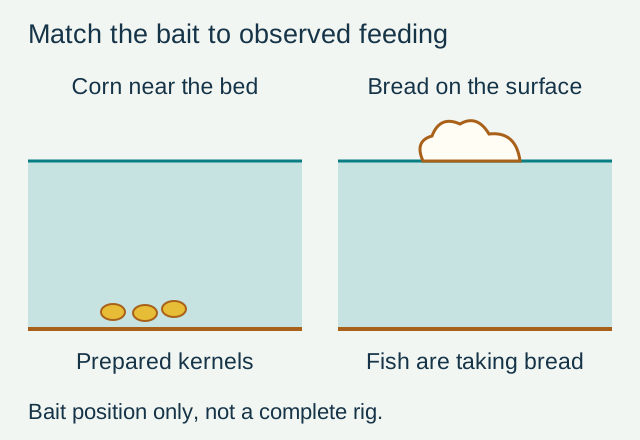
Corn for grass carp: prepare, cast and check
Fisheries agencies document corn as a grass carp bait; the British fishery Aston Park also lists it. Start with cooked kernels ready for use. Dry feed maize needs separate preparation and cannot be treated like a ready-prepared tin. Check the intended use and storage instructions on prepared products.
- Choose a clear spot near the bed. If you are still learning the tackle, begin with the bottom-fishing foundations.
- Mount the bait on your chosen rig and check that it stays attached. For hair-mounted corn, follow the basic hair-rig guide; targeting grass carp does not create one universal hooklink length or set of connections.
- Make a gentle trial cast, then retrieve and inspect the bait and hooklink. Fix a lost kernel or a tangled hooklink before continuing.
- Record the position and initial feed quantity. If you add more, note how much and when.
Surface bread: check that fish are taking it
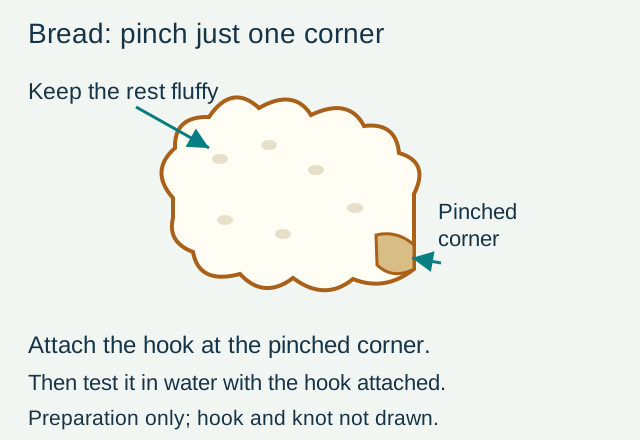
If feeding is allowed, offer a little unhooked bread and watch whether grass carp take it. Once they do, attach the hook in one pinched corner of a piece, leaving the rest fluffy. Test whether it floats with the hook attached before casting.
Avoid casting at the fish itself. Place the bait in its feeding area and watch your own piece. If you lose sight of it, retrieve and check before continuing.
How much feed, and what if there are no bites?
Begin with a small quantity you can measure using the same scoop. This is a suggestion for tracking your own fishing, not a prescribed grass carp dose. Check permitted feed types and quantities with the water's fishery manager.
With no bites, answer three questions first: is the bait still in place, is the hooklink clear, and have you actually seen feeding? Then change one thing — position or hookbait — and note the result. Without those checks, more feed will not explain why the last attempt failed.
Do I need special grass carp boilies?
These two starting approaches do not require boilies. If you already use them, distinguish a sinking hookbait from a pop-up that lifts the presentation. Check the complete rig in water after changing bait. Our boilies, corn and pellets comparison explains their uses and preparation.
Have the net ready before the take
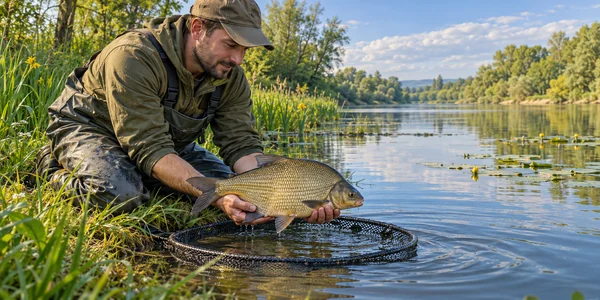
Grass carp can make a powerful run close to the bank. Use balanced tackle with a smooth drag. Prepare a suitably large net, unhooking tools and a wet mat if the fish must leave the water. Use wet hands and keep air exposure short; see the landing and unhooking guide for more detail.
Overseas angling examples support these approaches. Rules from their grass carp removal programmes do not automatically apply in Croatia: check permission to fish and feed, and the required treatment of a catch, for your water through the permits and local rules guide.