Prepare before the bite
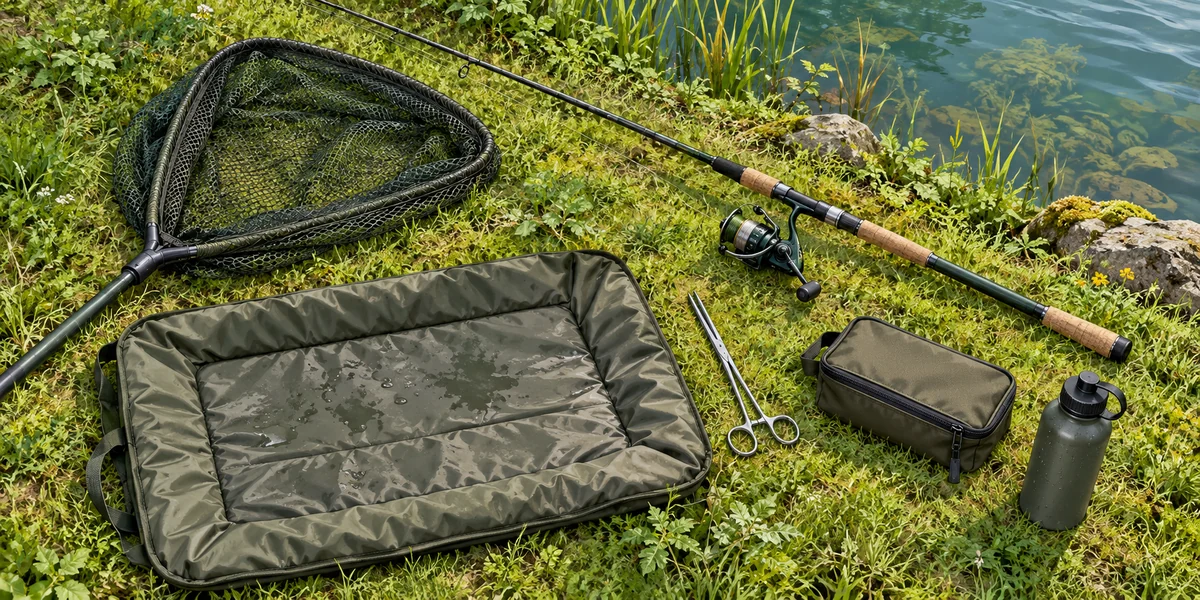
Open the landing net, keep forceps within reach and choose the landing position in advance. Prepare a suitable wet mat if a fish may need to leave the water briefly. You should not be searching for equipment after it is already in the net. Large or toothy fish require appropriate tools and practical instruction.
Land the fish instead of lifting it on the line
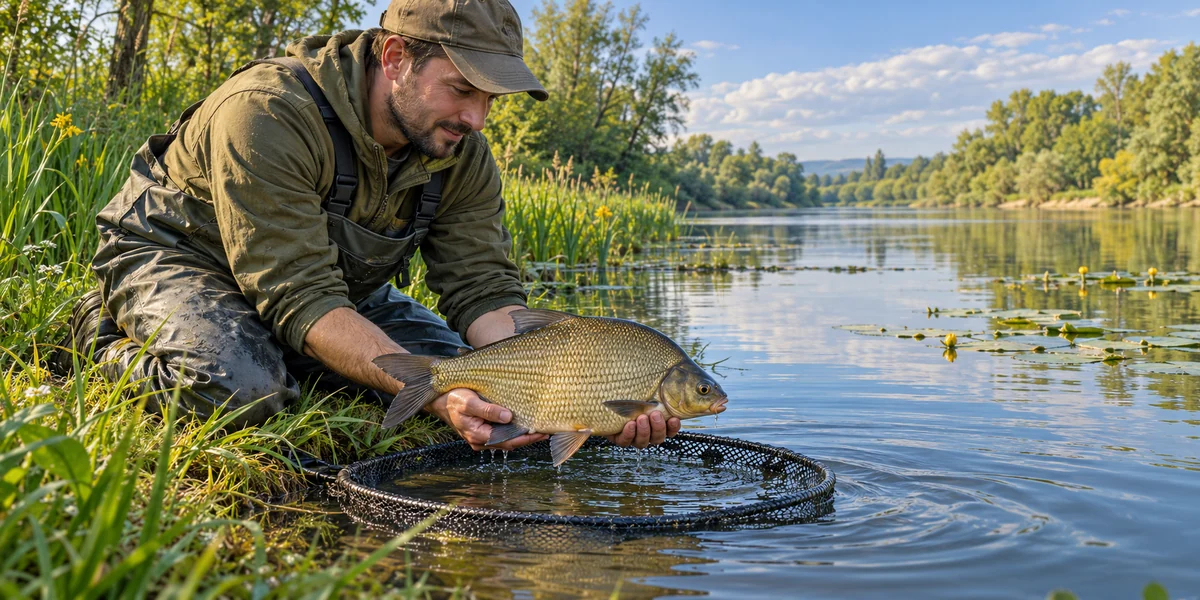
Bring the fish to the net under control without deliberately exhausting it. Do not lift it onto the bank by the line or rod tip. Soft knotless or rubberized mesh reduces rough contact; inspect it for hooks, damage and loops that might trap a fin.
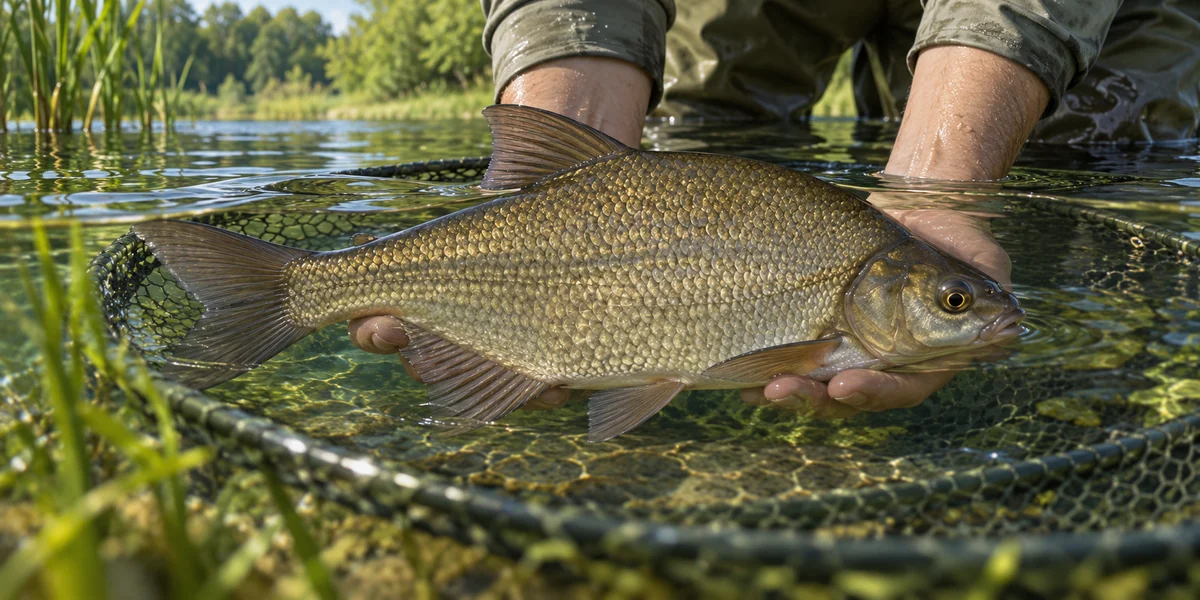
Support the body with wet hands, without squeezing. Keep fingers away from eyes and gills and never suspend the fish by its mouth. If a brief lift is necessary, stay low above water or a wet mat with its body supported. Swimming away afterwards does not by itself establish survival.
Unhook with minimum delay
Where practicable, remove the hook while the fish remains in the water. Use a suitable tool without force. Do not tear out a deeply swallowed hook. Professional guidance recommends cutting the line close to the hook when easy removal is not possible. This does not guarantee survival or override species rules.
A beginner should not learn pike or multi-hook lure unhooking alone. Arrange practical instruction before targeting such fish. A simple rig and help from an experienced person are more suitable for a quiet first outing.
Prepare the photograph while the fish is in the water
Have the camera ready beforehand. For a fish that must be released, choose a quick shot or an in-water photograph. Do not keep lifting it for another angle, weighing or a social post. A weakened fish, deep hook or poor conditions matter more than obtaining a picture.
Let it leave under its own power
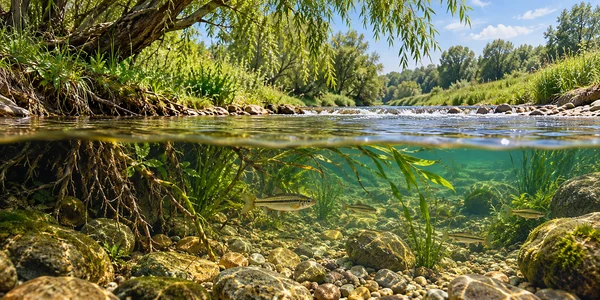
Support the fish in a natural position. In flowing water, face it into a suitable current without forcing it into strong flow or dragging it backwards. Let it leave once recovered and swimming for itself. Do not throw it from height or keep it in air while waiting for a better moment.
Release is not the same situation everywhere
Check rules and size limits and the local requirements before fishing. Protected, non-native or invasive species and specially managed waters cannot all be handled under one slogan. Never move a catch to another water. During heat or signs of distress, consider not fishing; read the water ecology guide for context.