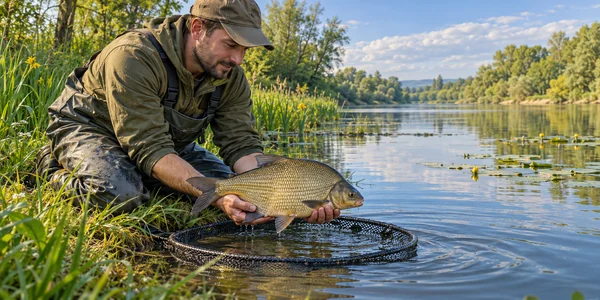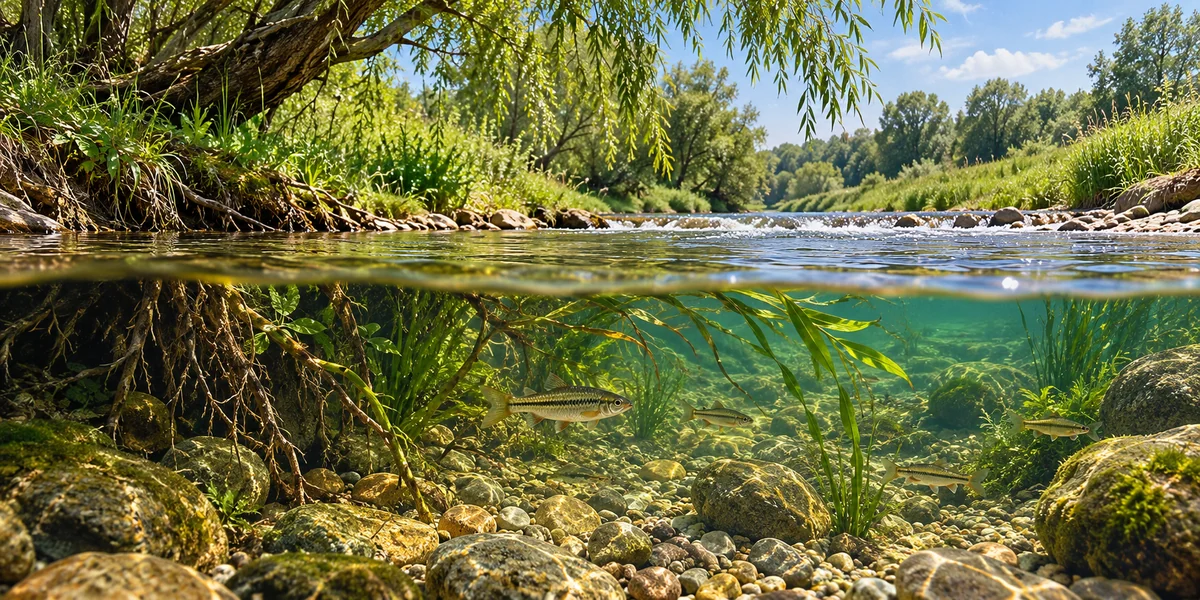
Warm water and oxygen are connected, not interchangeable
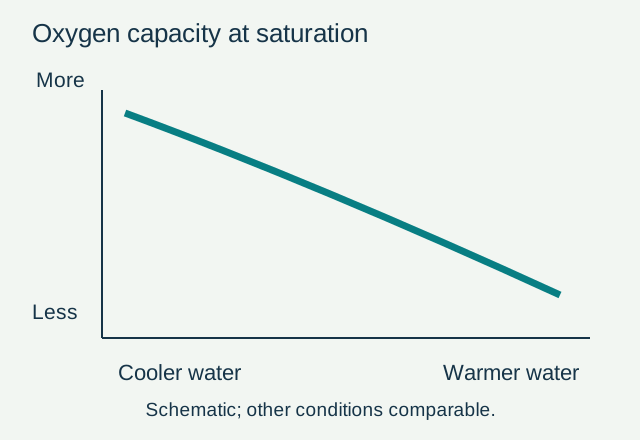
Under comparable conditions, cooler water can hold more dissolved oxygen than warmer water. Actual concentration also depends on aeration, flow, organisms and decomposition. Temperature helps explain risk but does not replace an oxygen measurement.
Plants are not a simple good-or-bad signal
Aquatic vegetation provides cover and habitat, and daylight photosynthesis can add oxygen. At night, organisms continue to consume oxygen through respiration. Bacteria decomposing organic matter use oxygen too. A warm, vegetated stillwater can therefore differ before dawn and in the afternoon. Dawn is not automatically the most favourable time.
Fish gathering at the surface or showing distress do not establish a single cause. Low oxygen is one possible problem, not the only explanation. Stop fishing and notify the manager. Do not add chemicals yourself or move fish to another water.
Spawning habitat is part of a life cycle
Connected river reaches, gravel areas, side channels and bank vegetation are not empty scenery. Different species use them at different life stages. Croatia’s Improve River LIFE project includes connectivity and habitat restoration in softmouth trout conservation. That does not mean every gravel bar has the same fish or spawning season.
Do not trample shallow gravel areas because fish are visible, remove vegetation to create a fishing spot or ignore local restrictions. A closed season is a rule to check, not something to infer from one picture or temperature.
Non-native does not mean any unfamiliar fish
Non-native and invasive non-native are not interchangeable terms. One fish’s appearance may be insufficient for identification. Base handling decisions on a correctly identified species and current water-specific rules, with expert assistance where necessary. Do not label every silver fish a Prussian carp or carry out your own stocking.
Clean and dry between waters
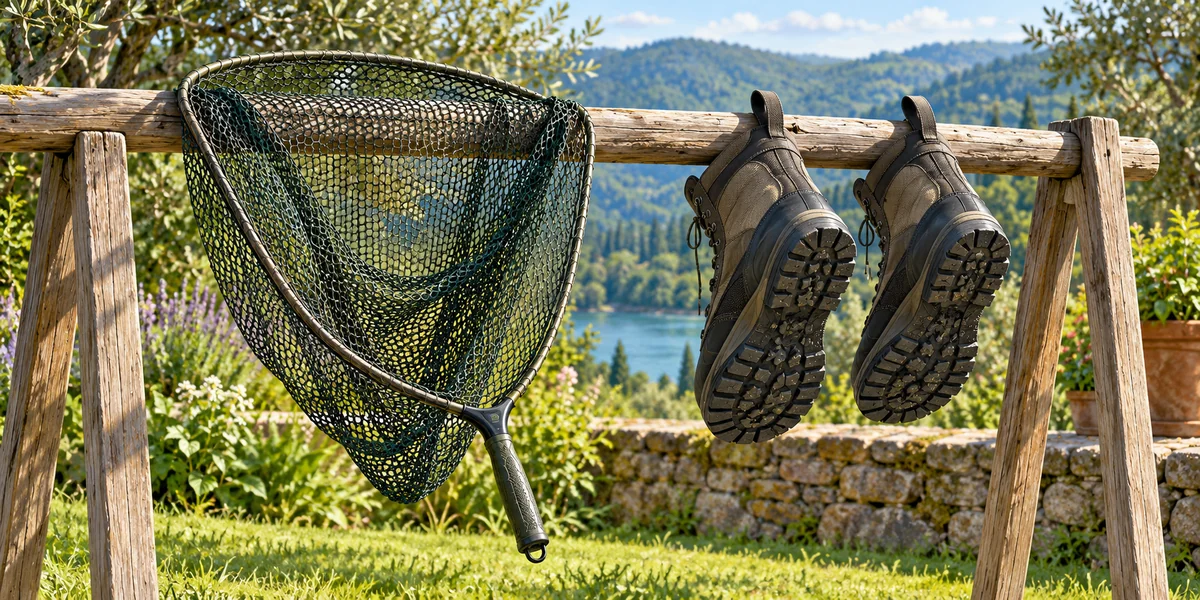
Mud, plant fragments and small organisms can travel on nets, footwear and other wet equipment. Inspect it, remove debris, clean it and dry it fully before moving to another water. Follow any fishery-specific disinfection procedure and the product instructions; do not pour residues into the water.
What an angler can genuinely contribute
Record observations without guessing: date, place, a photograph from the bank and a description of what you see. Pass it to the manager or responsible institution. One dead fish does not establish a cause, and a blank trip is not a list of vanished species. Useful notes and careful behaviour matter more than a confident explanation without evidence.