What is the difference between hookbait and loose feed?
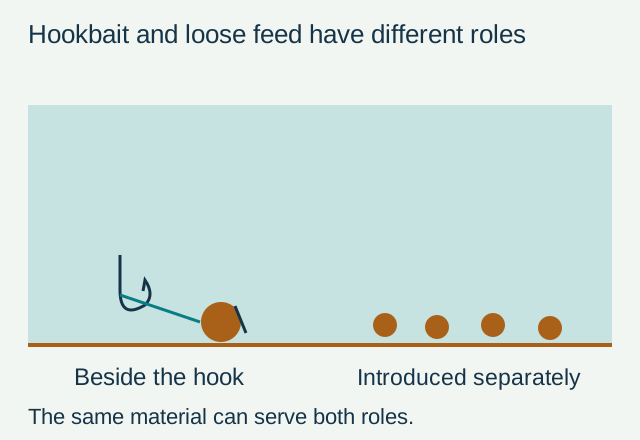
Hookbait sits beside the hook; loose feed is introduced separately. The same material can serve both roles: a hair-mounted boilie and a few free boilies are different parts of the presentation. First decide where and how the hookbait sits, then consider feed quantity.
Start with one hookbait and a modest amount of loose feed measured with the same scoop. On retrieval, check that the bait is intact and the hooklink tidy. Before adding more food, establish whether the tackle needs attention first.
How should I choose a boilie for the starting rig?
For the illustrated basic hair, start with a sinking bait and check the complete presentation in water. Pop-ups and balanced wafters are not automatically interchangeable with sinking boilies on the same hooklink. Follow the product’s intended use and check condition and size relative to hook and hair.
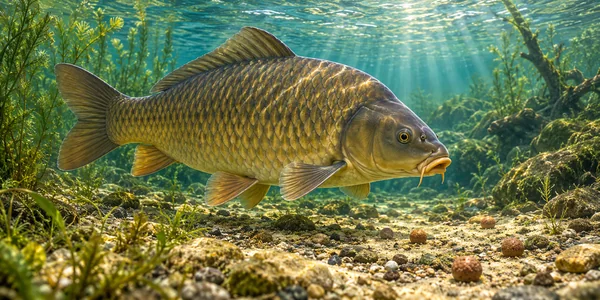
After changing bait, inspect the exposed point, stop and position. Packet scent alone says nothing about an untangled hooklink. See the carp encyclopedia profile for biology and farmed forms of common carp.
Is the corn already ready to fish?
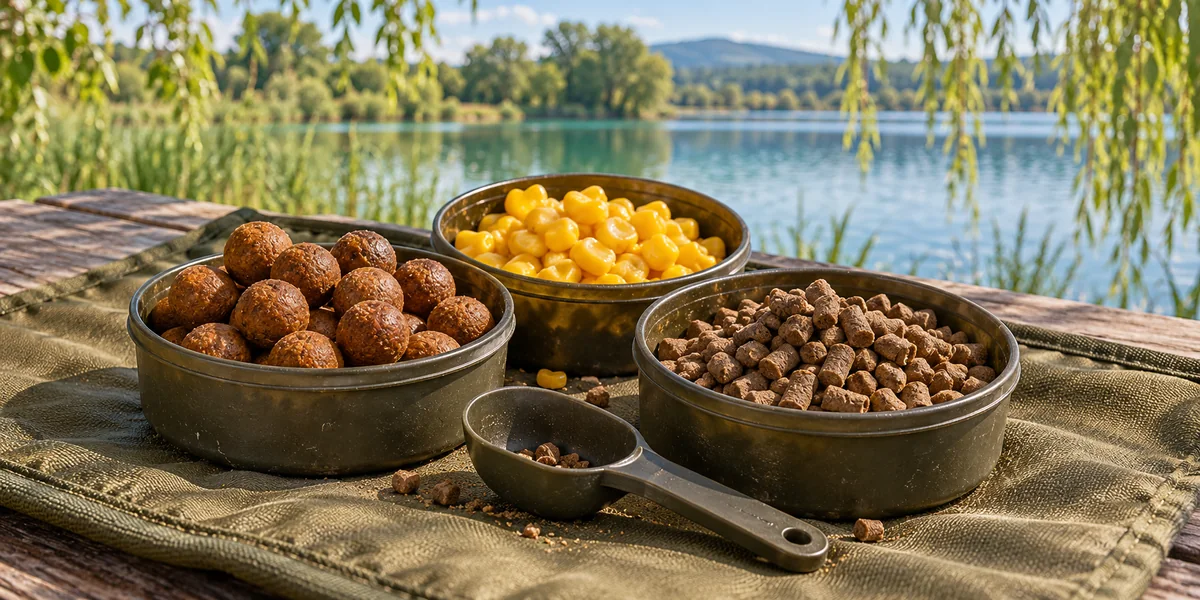
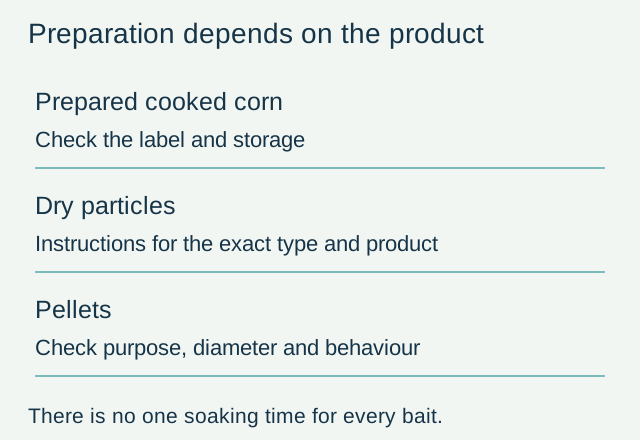
Distinguish a prepared cooked product from dry grain requiring preparation. Dynamite describes its Frenzied Maize as cooked inside the packaging; that does not apply to every bag of maize. A clearly labelled prepared fishing product is easier for a beginner to check, while following its storage instructions.
Prepare dry particles before fishing, following instructions for the exact type and product. Maize and nuts do not all need the same treatment. If the preparation is unfamiliar, use a prepared product and spend the first session learning the rig and bait position.
Should all pellets be soaked in the same way?
No. Diameter, composition and purpose change preparation and behaviour. Guru’s micro-pellet method concerns its 2 mm example: soaking, draining, then resting. It is not an instruction for every large hair-mounted pellet. Follow the label and separately check retention on the bait mount and behaviour in water.
How should I track feed quantity?
- Measure the initial quantity with the same scoop and record its composition.
- Note what you actually introduce and when, alongside bait position and observations.
- Change one factor: quantity, composition or presentation, rather than replacing everything together.
Without bites, check the hookbait, hooklink and bed conditions before feeding again. Keep a note of the amount introduced and check the feed types and quantities permitted on your water.