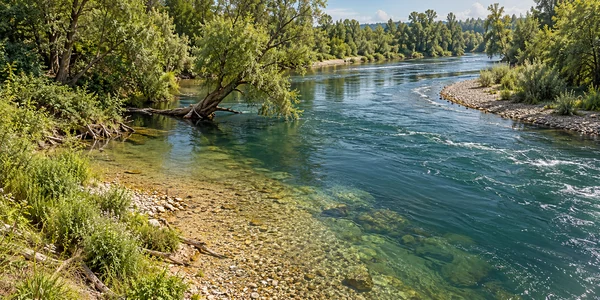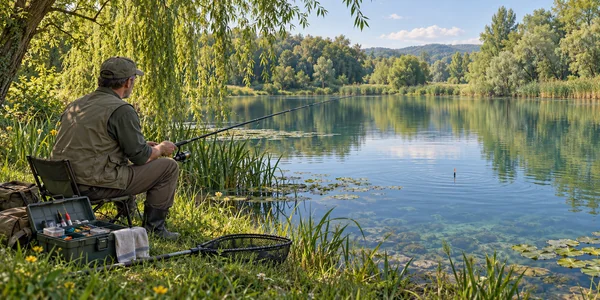
What can a lead tell me about a firm or soft bed?
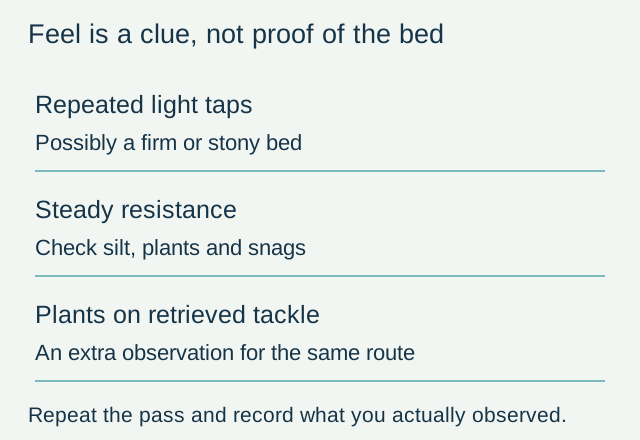
A controlled descent and gentle pull can provide clues about the substrate. Taps and juddering may suggest stones, while different resistance may indicate softer material or vegetation. Feel does not prove the exact bed composition: tangled line, accumulated plants and lead shape alter the impression.
Explore only where permitted and where you can retrieve tackle safely. This marker tackle has no hook. Choose a lead within the rod’s rating and begin with short, comparable casts. Our reading-water guide helps separate an observation from an assumption.
How do I explore one route?
- Record your casting position and choose a clear far-bank reference.
- Follow the lead down, then draw it slowly over a short distance with line under control.
- Repeat an interesting change in the same direction and compare a neighbouring pass.
- Retrieve and inspect any collected material. Do not blindly force resistance with hard jerks.
Compare sinking time between casts if useful, but use a marker float for depth. Record what you felt and checked again: repeated light taps in the same direction, for example, or plants returning on the lead. That is easier to revisit on the next session.
How do I estimate depth with a marker float?
Assemble a dedicated marker system according to its instructions: line must run freely through the lead connection to the float. After settling, draw the float down towards the lead, point the rod towards the spot and release equal, previously measured lengths of line until it surfaces. Add them for an estimate and comparison with nearby positions.
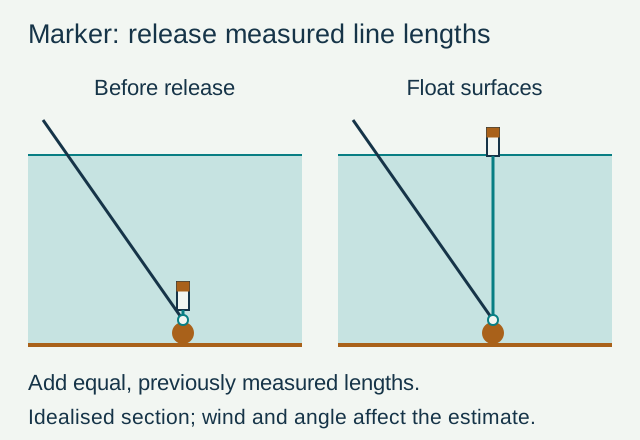
Choose calmer water for this check. Flow, wind, line angle, slack and a lead buried in silt can affect the result. If the float does not rise, do not assume excessive depth: check for snags, free line movement and the assembly’s buoyancy. Measuring with a plummet on a fishing float is covered in a separate guide.
How should I keep a useful record?
Note the standing position, reference, repeatable distance, resistance felt and estimated depth, with date and conditions. Include limitations such as “plants on the lead” or “wind affected the check”. Two neighbouring positions may suggest a change, rather than map the lake. Recheck after changes in water level or vegetation. Return to lead systems when selecting a fishing arrangement.