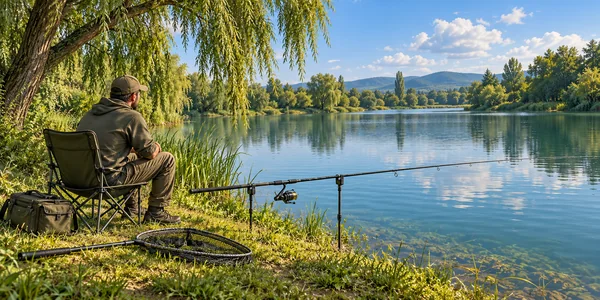
Is a running lead the same as an inline lead?
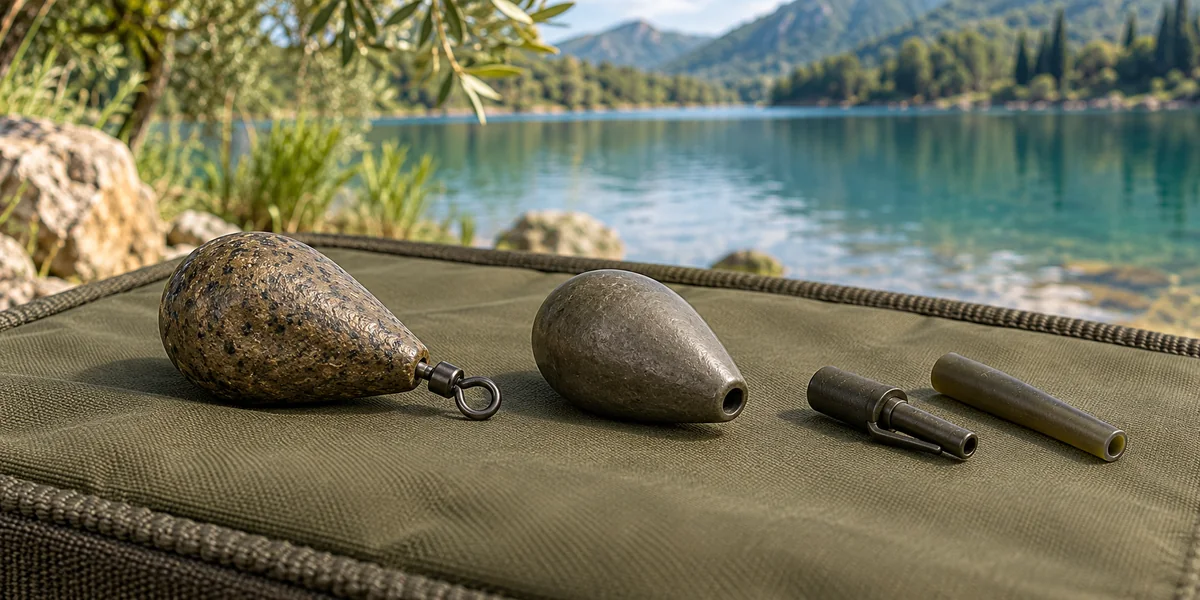
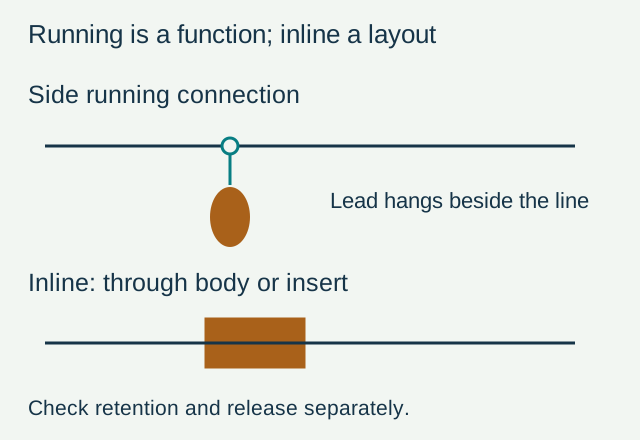
No. Running describes line movement through a connection; inline describes the line passing through the lead body or its insert. An inline system can have different retention and release arrangements. A picture of a lead alone therefore does not explain the complete rig.
On a side-connected running system, line passes through a moving eye with the lead hanging beside it. The introductory bottom-fishing guide shows one example. For a selected inline system, check the release path and whether the intended connection can pass through the opening.
How does a standard lead clip work?
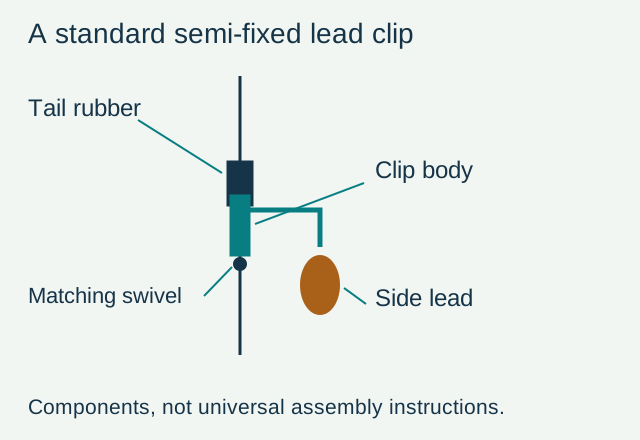
A swivel lead sits on the plastic clip’s side arm, retained during casting by a tail rubber. In the standard semi-fixed example, the clip must correctly retain its intended swivel. How far the rubber is pushed on affects the force needed to release the lead. Do not glue or otherwise block it against the instructions.
Korda also shows an advanced running version of the clip, assembled differently. For a first attempt, use a standard kit and its instructions. If you cannot clearly check the lead’s release, assemble it with an experienced angler before taking it fishing.
What should I check before fishing?
- Trace the line path from main line to hooklink: what does it pass through, and what stops it?
- Check compatibility between insert, swivel, clip, rubber and any leader.
- Follow the original checks for release after snagging and main-line failure. A leader knot must not become an unintended obstruction.
- Recheck after any component substitution and inspect wear.
For one inline example, Korda describes a purpose-made Safety Inline Sleeve that separates from the lead. Do not assign that feature to every insert. Fox’s guide also shows a distinct drop-off inline kit with its own plug and pin, rather than an ordinary inline rig with an arbitrarily removed part.
Which system should I start with?
Start with a kit you can assemble and check away from the water. Fish over a clearer bed, away from snags you cannot retrieve from safely. A lead and marker float can help you explore the swim. If changing a rubber or swivel stops the release working properly, return to the instructions before casting.