Pause and look before casting
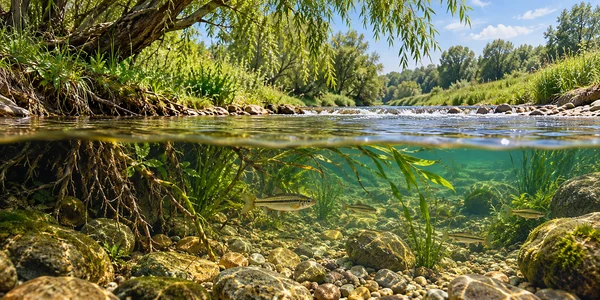
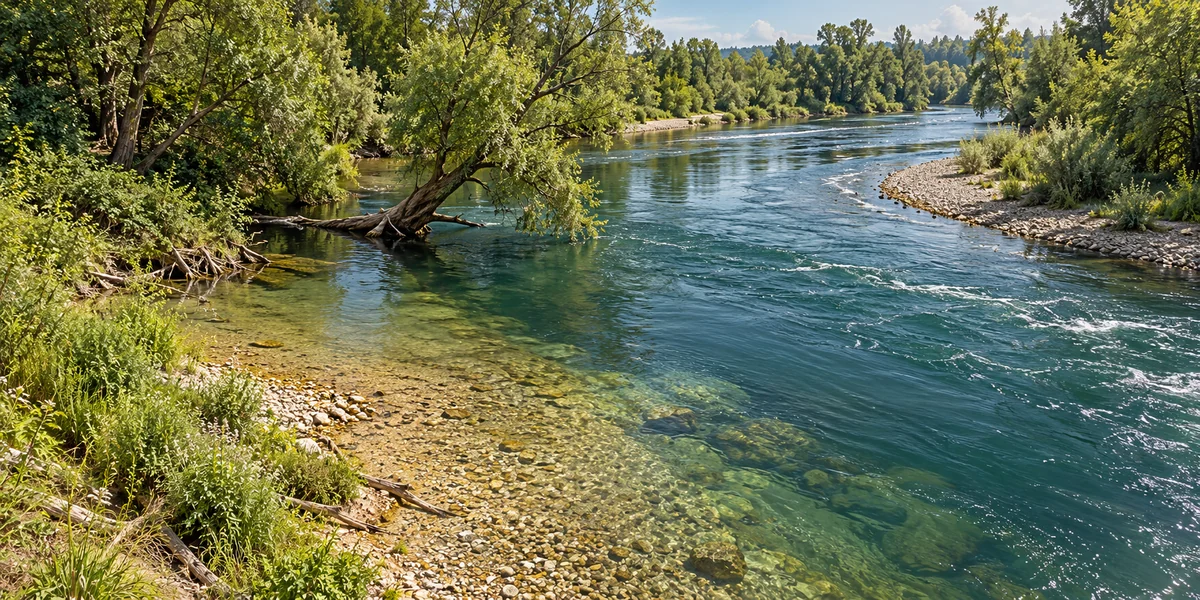
Water offers clues but does not reveal everything. Follow foam or leaves, the boundary between rippled and quieter surface, bank shade and obstacles. These support initial ideas about flow and shelter; they do not prove depth, fish presence or safe wading.
Look for a change, not a magic spot
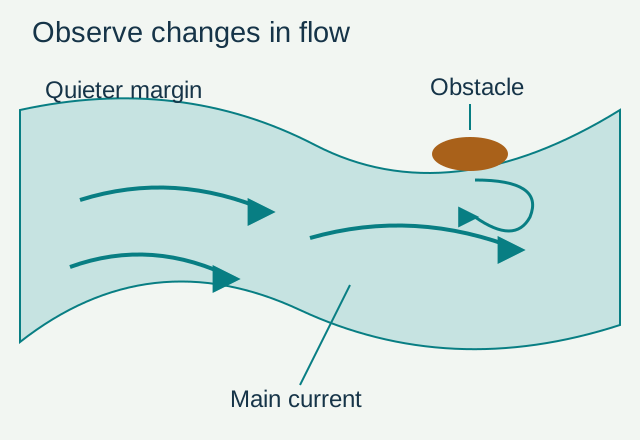
A current seam is worth observing because different velocities meet there. An obstacle may create shelter and eddies, but also snags, unstable banks or hazardous currents. Watch from land: where does a floating object slow down or return? Do not conclude that a fish must be there.
On still water, observe vegetation edges, changes in substrate and cover. Check depth with an appropriate method under the local rules. A dark patch is not a reliable depth sounder; shade, substrate, plants and turbidity can all produce it.
Gauge height is not the depth below your hook
A gauge reading expresses water-surface height relative to that station’s reference level. Depth is the distance between surface and bed at a specific point. A gauge value therefore cannot simply become the depth at your bank, and separate stations need not share the same zero.
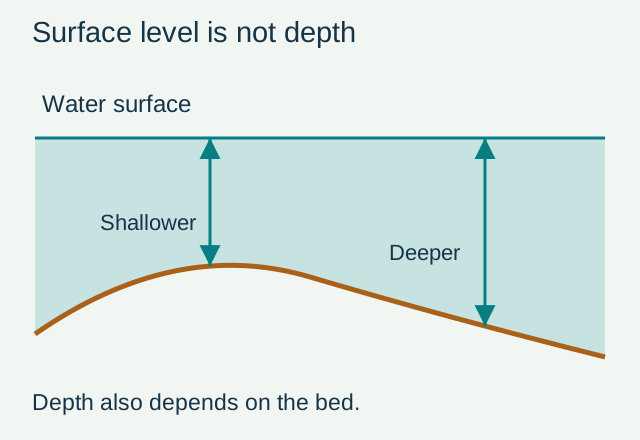
Also check the direction of change, observation time and station location. A rapid rise can alter access and flow before a photograph looks dramatic. A high bank does not guarantee a safe return. Follow official weather and hydrological warnings; a fishing score is not a safety advisory.
Turbidity is information, not an automatic advantage
Distinguish new turbidity after rain from a persistently coloured water body. Appearance alone does not determine chemistry, cause or suitability for fish. An unusual smell, colour, persistent foam or distressed fish calls for leaving the situation and notifying the fishery manager, not experimenting with stronger bait flavour.
Turn an observation into a checkable plan
- Record time, place and what you actually see: “leaves move quickly along the edge”, rather than “fish are active”.
- Ask a small question: can you control the bait in the chosen zone?
- Choose a safe, permitted position without trampling plants or spawning substrate.
- Record changing conditions and blank trips, not only successful moments.
In the forecast, check the associated station, timestamps and measured versus estimated inputs. A higher score does not establish depth, bank safety or a future catch.