Water depth and rig depth are different
Water depth belongs to the spot being measured. Rig depth is set by the distance between the float, or its stop, and the hook. A neatly loaded float can still suspend its hookbait well above the bed. Establish a reference for the actual fishing spot before feeding it.
This guide starts on calmer water with the float’s loading already checked. If you do not yet know how the float behaves without bottom contact, first do the loading check. Current, obstructions and soft ground can complicate a reading; that is not a reason to label an estimate as an exact depth in metres.
How to plumb the depth with a plummet
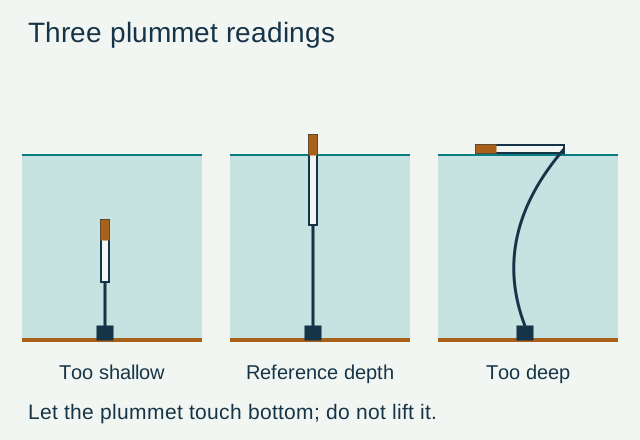
- Attach the plummet to the hook according to its design, protecting the hook and checking that it cannot detach during lowering.
- Lower the rig carefully onto the chosen point and let the plummet touch bottom. Do not suspend it by holding the line tight.
- If the float disappears, increase the set distance to the hook. If it lies flat or rides excessively unloaded, reduce the distance and repeat.
- Find a setting where the plummet stays on the bed and the float shows its tip in the expected position.
- Record the setting, remove the plummet and inspect the freely suspended rig again before baiting.
Watch the line during each check. If it is tight enough to lift the plummet, the reading will be misleading. The float must already be loaded correctly, the line free and the plummet on the bed. Only then use the float’s position to decide whether to increase or reduce the setting.
Why one reading can mislead
A heavy plummet can sink into soft silt. The indicated distance then differs from the silt surface or the level where a light hookbait will settle. Weed can support the plummet above the true bed, and an angled line complicates direct comparison. These situations do not all mean the float is faulty.
Repeat the lowering at the same point, then compare a few nearby positions. If every reading is taken far from the last one, you cannot distinguish bed changes from changes in your technique. Record a marker and distance; a short note is more useful than remembering approximately where the float stood.
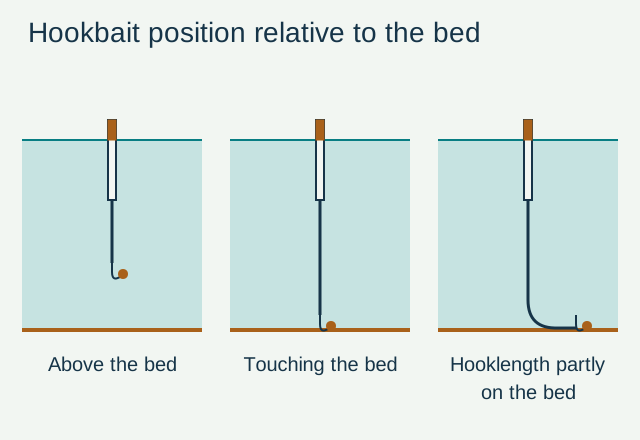
Choose hookbait position after measuring
The reference does not require fishing one setting throughout the session. Reducing float-to-hook distance raises the hookbait above the bed. Increasing it can lay the bait and part of the hooklength on the bottom. Make a small, known change and record it so you can return to the start.
If the hook comes back with weed, recheck hookbait position and the neighbouring bed. Keep the original setting as a reference, then compare fishing slightly clear of the bed with laying a little more hooklength on it. You will know what changed and can return to the starting point.
When to measure again
Recheck after moving, losing a setting in a tangle, or changes that make the previous reading unreliable. A river-gauge level is not the depth beneath your float: station data cannot replace a swim measurement. On a river, the next task is understanding how flow and line control alter presentation.