Flow acts on the float and the line
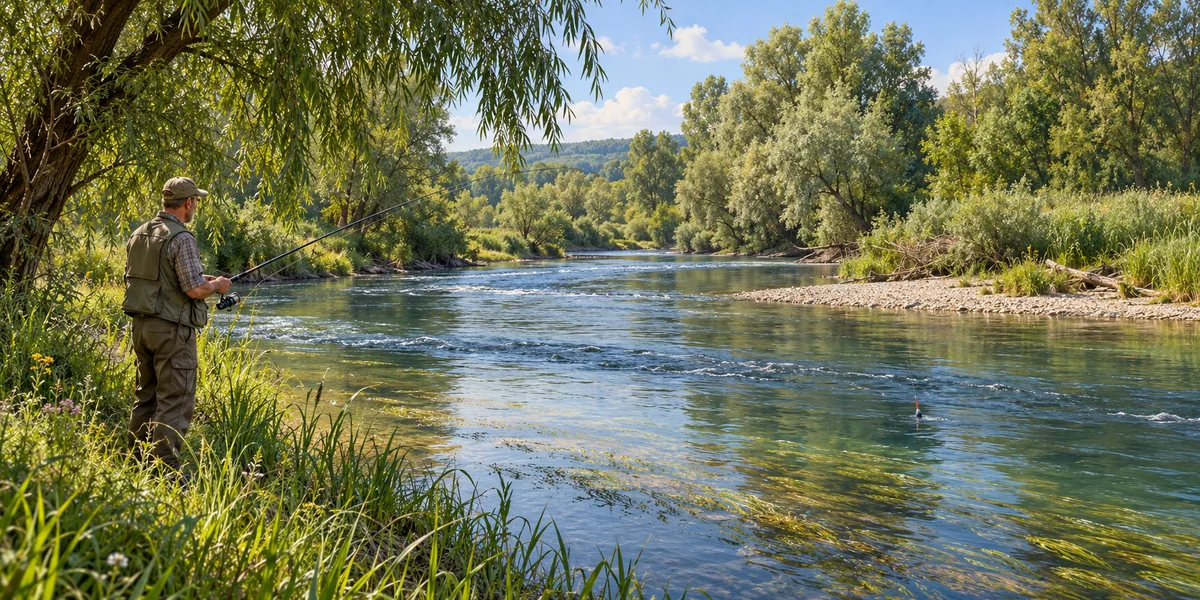
On a river, you are following more than an orange tip. Current and wind act on the line between rod and float, while the lower rig travels through another part of the water column. The float can appear settled while the hookbait follows a different route or catches bottom. Presentation control is therefore a separate task alongside correct loading and knowing the depth.
This guide starts with a top-and-bottom attached river float, such as an appropriate Avon or stick model, on a rod and reel. It is different from a bottom-attached stillwater waggler. Follow the selected model’s instructions for its upper connection and lower rubbers; both must hold the setting without damaging the line.
Choose a repeatable drift lane
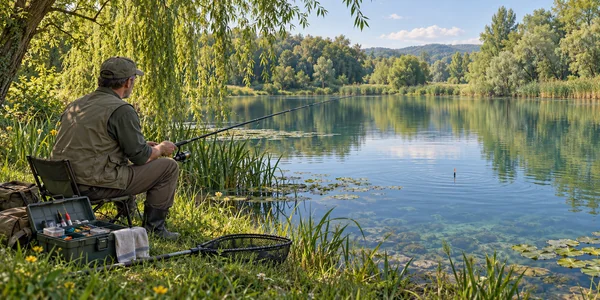
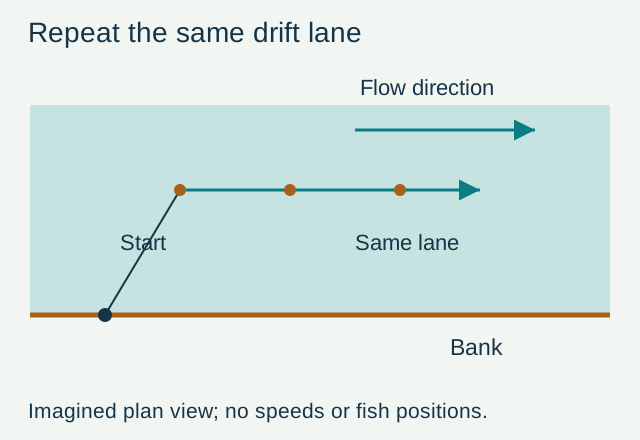
First assess bank access, the space to follow a drift and a landing position. Do not plan an initial practice session in dangerous floodwater. On accessible water, choose a lane you can see downstream and follow without walking along a slippery bank.
Measure depth as conditions allow, note the reference and make several drifts along the same route. Signals from constantly changing positions are difficult to compare. A visible boundary of faster water may help select a lane, but it is neither a fish-position map nor proof of uniform current throughout the depth.
How do I choose a river float?
Choose a river float for depth, current and the distance at which you can follow it. Dave Harrell’s source guide connects those choices with shot placement. Use its loading examples for comparison, then check how the float behaves at your swim.
A fine tip invisible at the end of the drift is not useful merely because it looks sensitive. A larger float also cannot remove the problem of a big line bow being pulled across the surface by wind. Start at a distance you can follow properly and add complexity gradually.
Run through, then briefly hold back
- Lower or cast the rig under control to the chosen starting point and let it settle.
- Follow the float with the rod, feeding line without allowing a large uncontrolled bow.
- On a comparable subsequent drift, briefly slow its travel through line control, then ease the pressure again.
- Observe changes in stability, bottom contact or indications. Retrieve and inspect before changing loading.
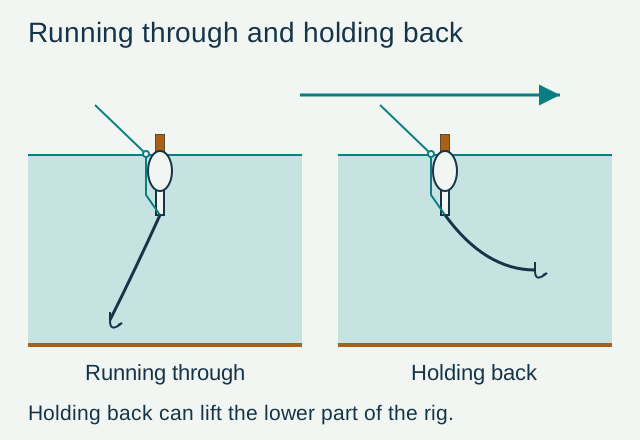
Holding back changes more than the speed of the visible tip. The lower rig can lift and move downstream relative to the float. Harrell illustrates this for both spread shot and bulk-loading arrangements. Our diagram shows the principle; actual angles depend on flow, depth, loading and control.
Decide whether shot positions need changing
If the tackle repeatedly catches bottom, first examine depth, route and hook condition. If it tangles during casting, inspect spacing and landing control. Martin Bowler describes grouping loading differently in particular conditions, without establishing one pattern that solves every current.
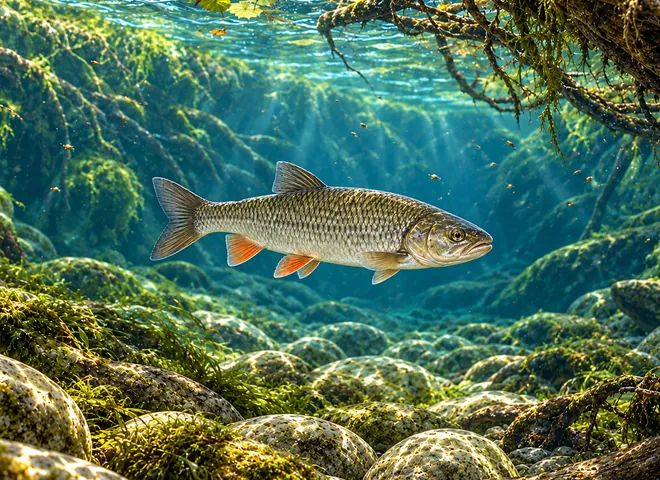
Keep to the same lane while comparing a free run with a brief hold-back. If the rig catches bottom in one place, note where before changing the whole arrangement. See the chub profile and our article on its natural diet for species context.