What is a hair rig?
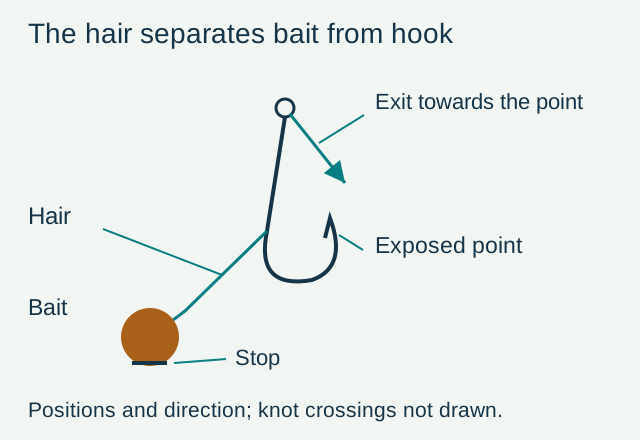
The bait sits on a short continuation of the hooklink beside the hook, instead of covering its point. A small loop and stop retain it on the hair. This introductory example uses soft hooklink braid and a sinking bait. Buoyant hookbaits and specialist pop-up rigs require their own preparation.
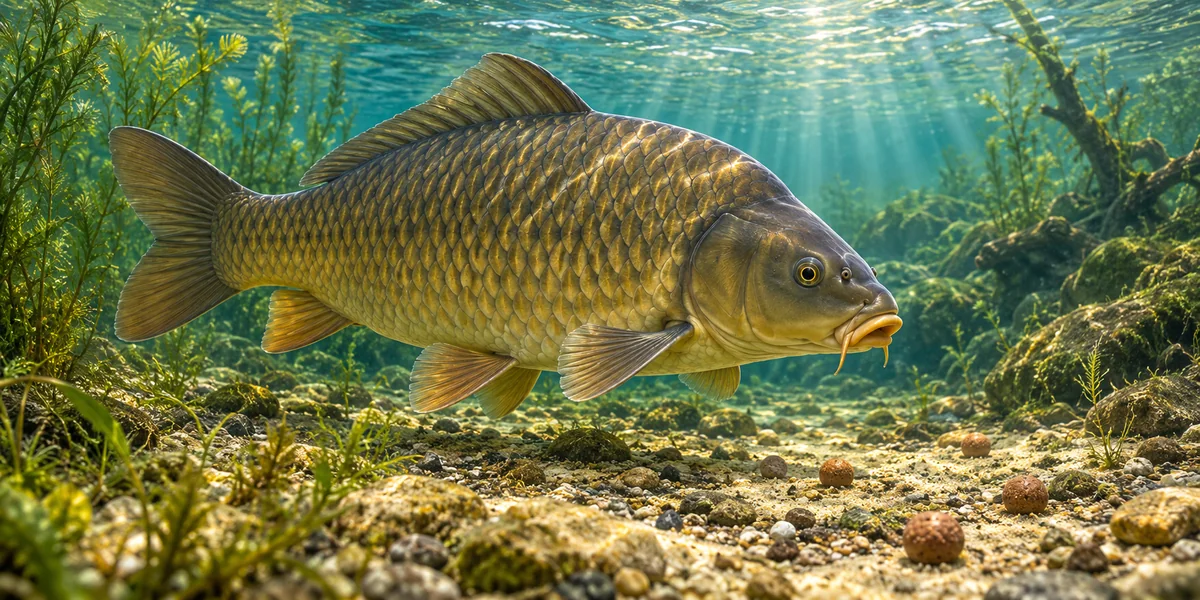
A ready-tied hooklink can help you learn the positions of bait, hair and hook first. If tying your own, begin with soft hooklink braid and a suitable hook. See the fully scaled carp profile for the fish; the following steps cover its tackle.
How do I tie a simple hair-rig hooklink?
- Tie a small loop in the braid end to retain the stop. Leave enough material for the hooklink and knots.
- Use a baiting needle to place the chosen bait on the hair and secure it with a stop. Set the length using the actual bait.
- Pass the other end through the hook eye from the back towards the point side and position the hair along the shank.
- Hold that position and make neat knotless-knot wraps around shank and hair, avoiding the eye’s wire join on the first wrap. Gardner uses eight for its example hook; this is not universal for all hooks.
- Pass the end back through the eye towards the hook point, tighten carefully and check. Connect the hooklink’s other end according to your lead system’s instructions.
The Gardner photographs in the sources show the knot crossings for this soft-braid version. Korda’s BASIX guide uses coated material and strips some coating first. Plain soft braid needs no stripping; concentrate on neat wraps and the line exiting towards the hook point.
How much separation should I leave between bait and hook?
Set the hair length with the hookbait you will actually use. Keep the bait separate from the bend and the hook point clear. Recheck that gap after changing boilie size or adding a grain of corn.
What should I check in shallow water?
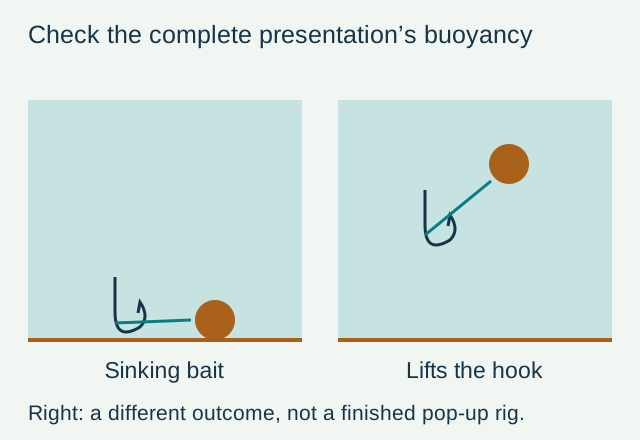
Observe whether the chosen bait sinks and the presentation settles as intended, without covering the point or wrapping the hair. A bait that lifts the hook is outside the starting example shown here. Retrieve and inspect after a trial cast. If the hair has wrapped around the hook, untangle it and repeat the check.
The hair does not determine how the lead works: check that separately in the lead-system guide. Continue with hookbait and measured feeding next.