How do I assemble my first spinning setup?
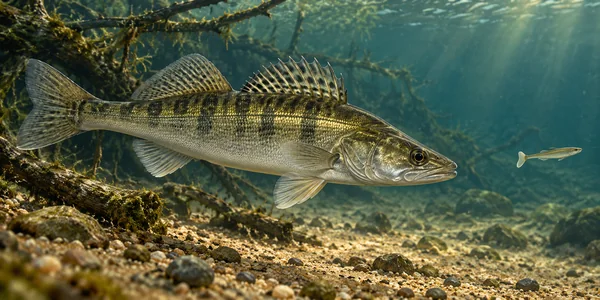
Start with the water, a species you may legally target and the lure you want to present. A spinning reel mounted below the rod offers a straightforward way to learn casting and retrieving. Choose an accessible bank and a clear route for your first session, without needing long casts.
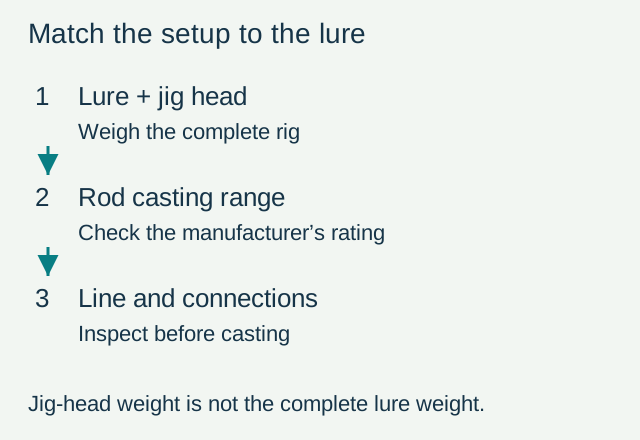
Check the rod’s marked casting range against the complete rig weight, rather than the jig head alone. Action describes where a rod bends; power describes the load needed to bend it. They are different specifications. Follow appropriate instructions for the line and connections you actually use.
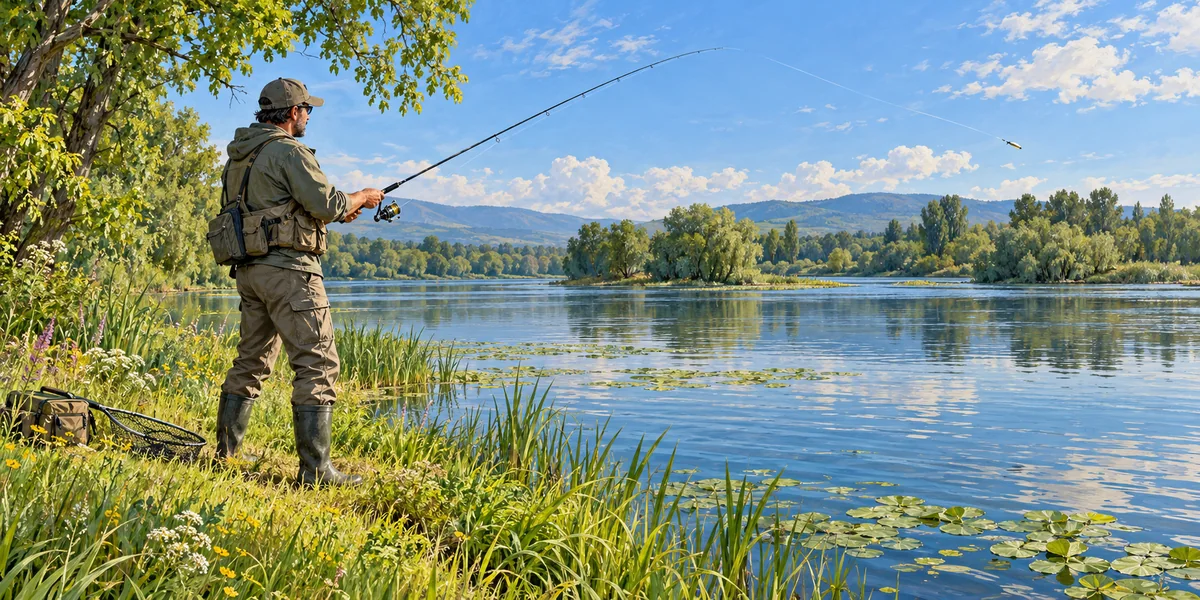
Your first cast with a spinning reel
- Check behind you, overhead and along the casting route. Keep people, branches and power lines outside the tackle’s reach.
- Hold the line with the index finger of your rod hand, then open the bail with your other hand.
- Make a smooth forward movement and release the line from your finger. Practise accuracy with short casts.
- After the lure lands, close the bail by hand, recover loose line and begin your chosen retrieve.
If line wraps around the tip or the lure snags, stop before casting again. A harder swing is not a solution. An adult should supervise children practising their first movements in an open space.
How do I retrieve a lure after casting?
First make a short pass through visible water and watch whether the lure works properly. Repeat a steady retrieve before adding pauses or speed changes. Learn to reproduce one route first. Lure design, retrieve speed and rod position all influence its passage through the water.
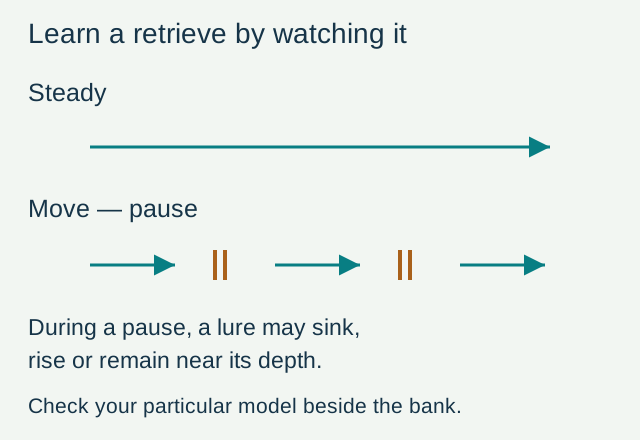
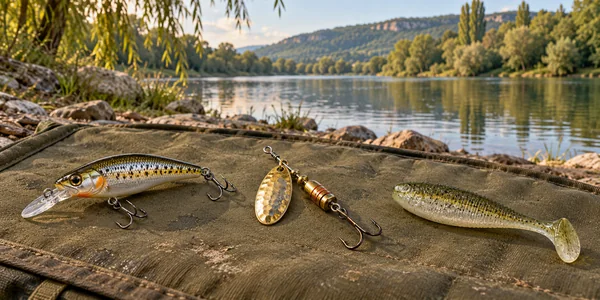
Different lures behave differently when paused. Check buoyancy, stated running depth and the behaviour of your particular model. If you are unsure what to choose, continue with our plug, spinner and soft-plastic comparison. Before targeting pike, prepare the trace and landing equipment.
What should I record after the first session?
Remember one route you can repeat and a speed at which the lure works cleanly. If you snag repeatedly, improve that route or choose another position next time. Check the line and lure after retrieving. Before fishing, check your permit and the water’s rules, and prepare a net and tools with the fish-handling guide.