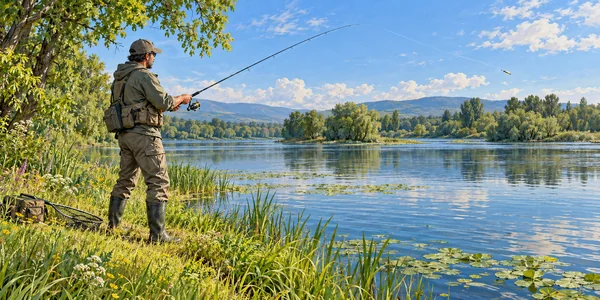
How do I choose a lure for the water layer?
Start by asking which layer and route you can fish. Colour cannot fix a model that repeatedly snags or misses your intended layer. Compare stated weight, running depth, buoyancy and retrieve style before considering size and colour.
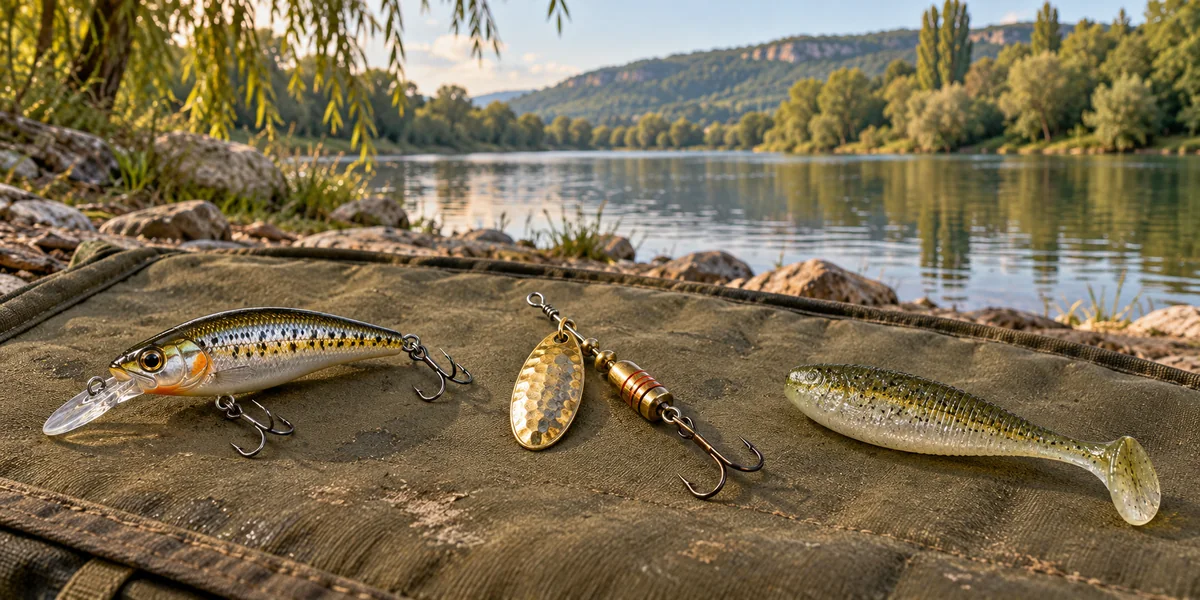
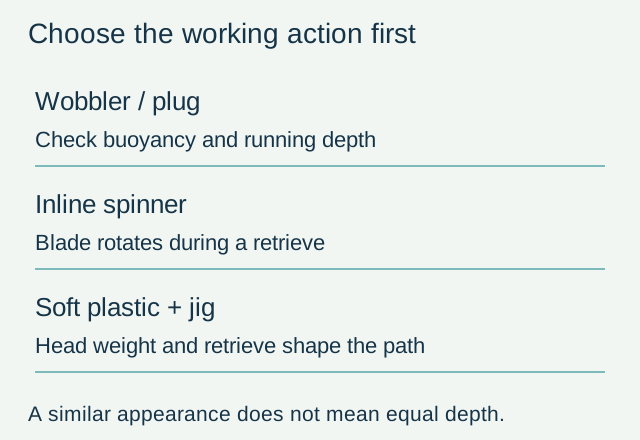
Start by comparing three familiar families. A plug or wobbler is a hard fish-shaped lure, often with a diving lip. An inline spinner has a blade rotating around a shaft, while a soft plastic needs a suitable hook or head. Learn how the particular lure works in water before switching to another.
What should I check on a plug?
Separate buoyancy from running depth. A floating plug can dive during a retrieve: floating does not mean it stays on the surface. A suspending model is designed to remain near its depth on a pause, while a sinking model continues descending. Read the particular model’s description and make a short visible pass before casting farther.
For example, if you want to pause above an obstruction, ask what your lure does when winding stops. Do not infer this from its outline or two similar packets. Nor should one model’s stated running depth become a rule for all plugs.
How do I check that an inline spinner works?
The blade rotates during the retrieve. Watch beside the bank to see whether it starts reliably at your chosen speed. Blade shape changes behaviour; two spinners of equal weight need not suit the same route. Start steadily, then vary speed while you can still follow the action and path.
What changes with a soft plastic on a jig head?
On a conventional jig, head weight and retrieve help shape the fall and lift. A larger head is not the answer to every snag. Check the straight body, route and line control first. Our zander jig guide explains the steps; see drop shot for a weight below the hook.
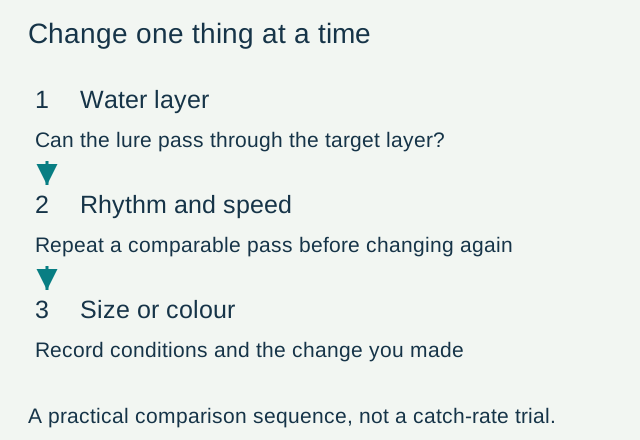
How do I compare lures without changing randomly?
- Choose a repeatable cast and check whether you can identify the layer being fished.
- Compare one change in speed or rhythm while keeping other factors similar.
- Then compare size or colour and record what actually happened.
Note what you changed: speed, pause, size or colour. Include snags and casts without takes so repeated patterns are easier to spot. Return to the first spinning setup for tackle, and prepare bite protection before targeting pike.