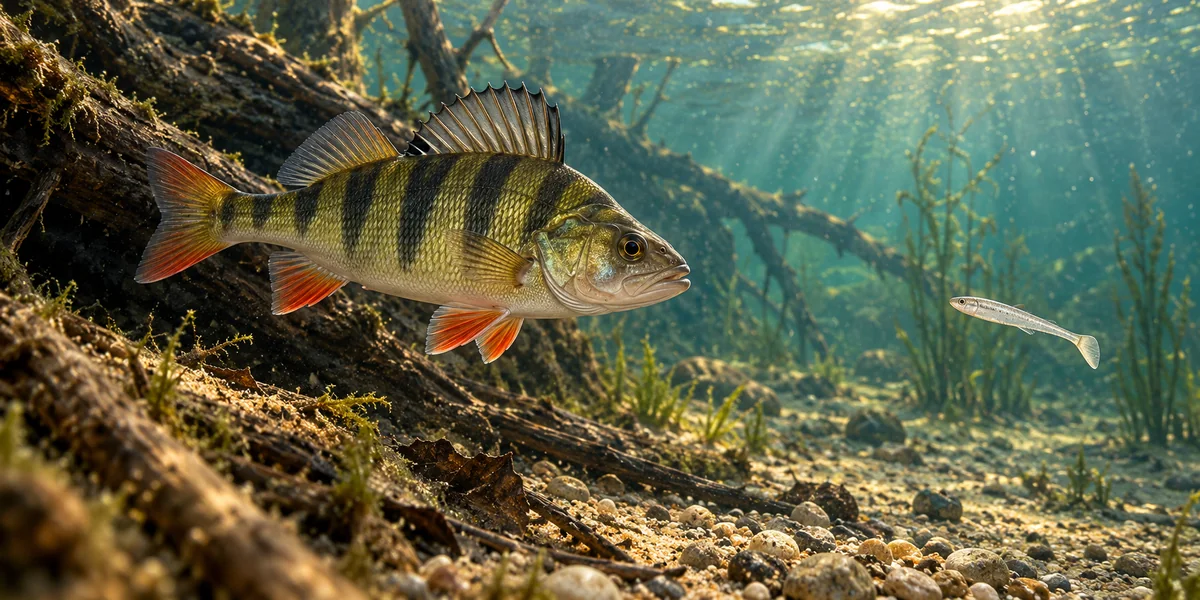
What is drop-shot fishing for perch?
A drop-shot hook sits on the line above an end weight. You can move a small soft lure while moving the weight very little, instead of retrieving the entire rig continuously. This differs from a conventional jig, whose weighted head sits directly beside the lure.
This example uses an exposed hook and a nose-hooked soft lure. It is not a Texas weedless variant. Match tackle to the weight and conditions, and have a net and tools ready. See the perch profile for identification.
How do I tie a drop-shot rig?
- Choose a compatible drop-shot hook and retain enough tag end for the weight.
- For a Palomar, double the line and pass the loop through the eye, tie a loose overhand knot, then pass the loop over the entire hook. Tighten carefully according to your line’s instructions.
- Do not trim the tag short: for this arrangement pass it back down through the eye from above so the hook point faces up.
- Attach an appropriate drop-shot weight below the hook using its intended attachment system. Nose-hook the small soft lure, leaving the point exposed.
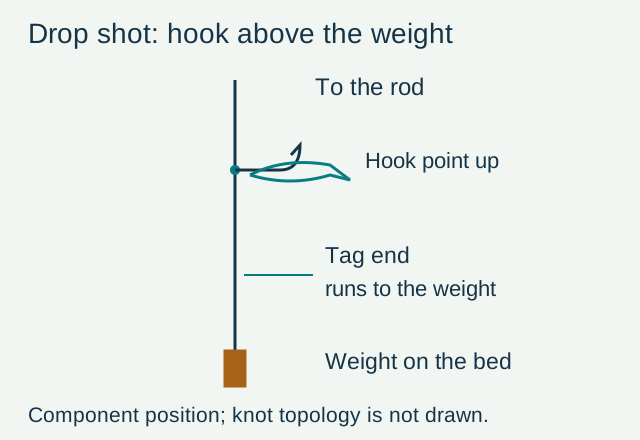
Use the linked Palomar instructions to check the line crossings. Pull-test the connection and make sure the hook point faces up. Follow the maker’s instructions for hooks with a specialist tying system.
How high is the lure above the bed?
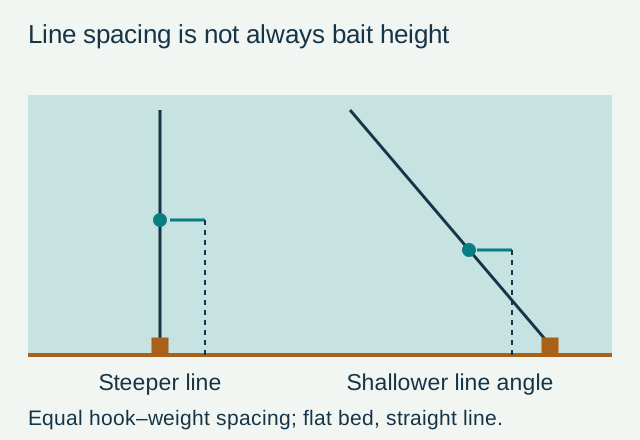
Hook-to-weight spacing does not always equal the lure’s vertical height. A long cast with an oblique line puts it lower than the same spacing on a near-vertical line. Bed shape and line slack also affect the position. Recheck the lure’s position when you change casting distance.
How do I work a drop shot?
Settle the weight on the bed, then use small tip movements to animate the soft lure without constantly dragging the weight. Include pauses. After working one position, move the rig and repeat. If flow carries the weight continuously, adjust the position or loading within your tackle’s rating. Establish control before comparing rhythms and lures.
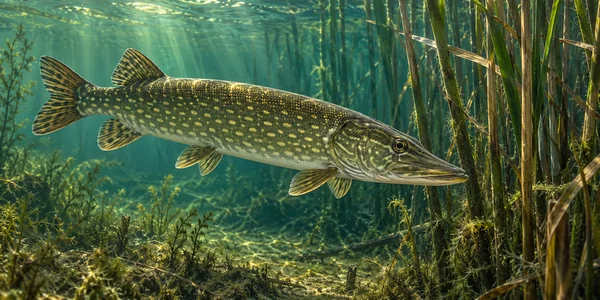
What if pike are present?
This fine arrangement does not protect against pike teeth. If pike repeatedly take the lure, do not continue targeting them on the same trace. Change approach and prepare appropriate pike tackle. Inspect the line after snags and remove damaged sections. Check that the chosen Croatian water permits the method and tackle before fishing.