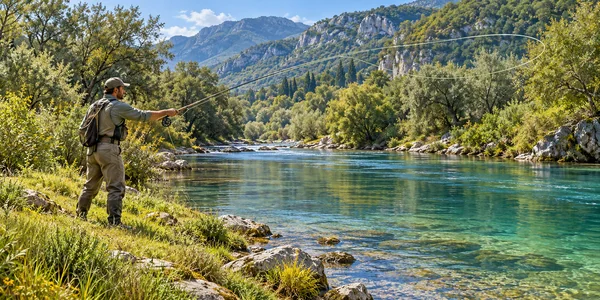
What makes a fly-fishing outfit different?
In fly fishing, the line carries a light fly through the air. Choose the rod and line together. For the first session, learn a short cast that places the fly where you intend. Distance can come later.
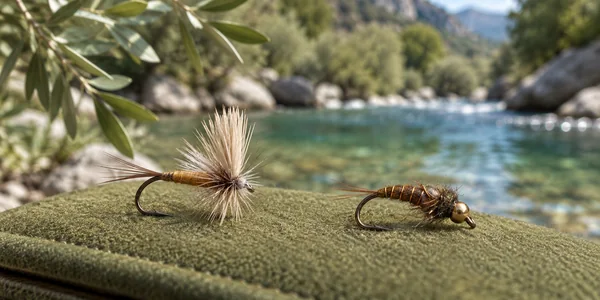
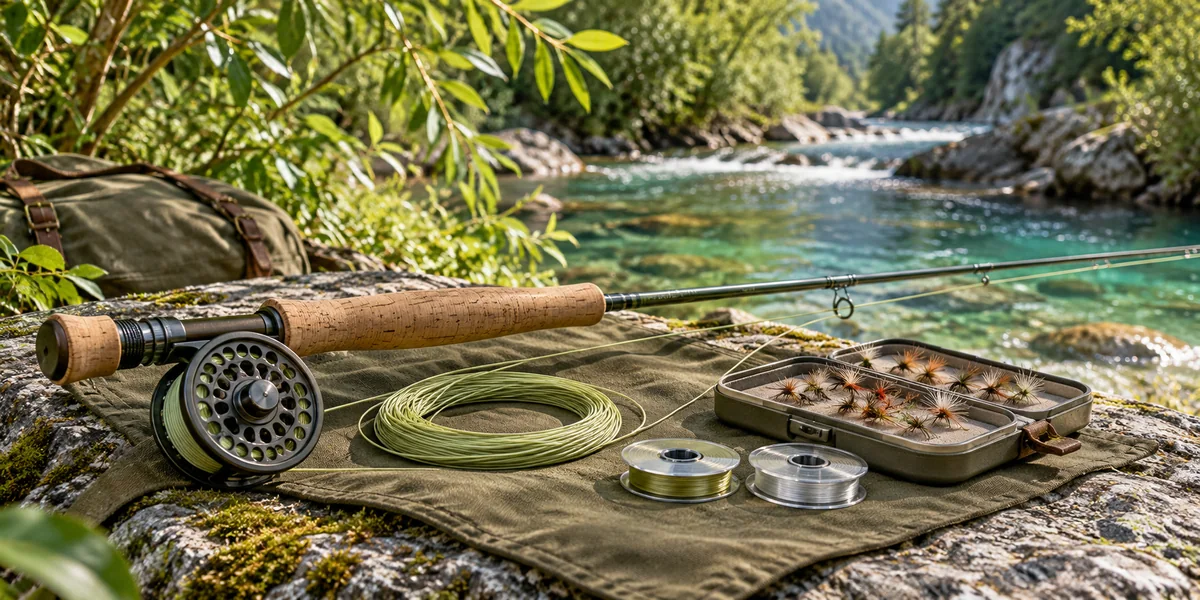
Start with a rod, a fly reel carrying a correctly prepared line, a leader, tippet and a few flies for the intended presentation. Add snips, unhooking tools and a ready landing net. Waders are optional at this stage: choose safe bank access before considering entering the river.
How do I match a fly rod and line?
Check the rod’s recommended line class against the line’s specification. A matching weight-forward floating line, marked WF, is one introductory example. No single class suits every water or fly. Fly-line class is a different rating from the lure-casting range in grams on a spinning rod.
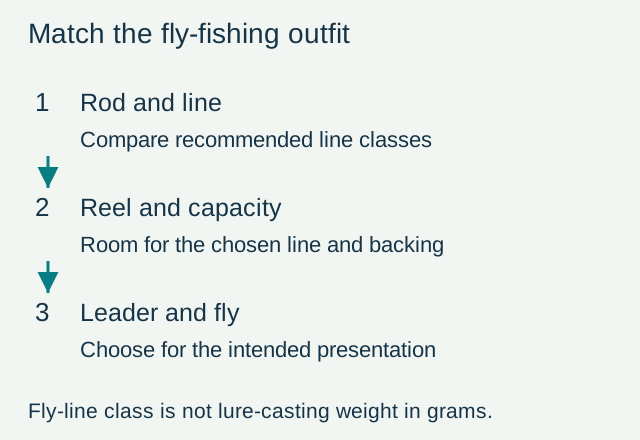
Check that the reel has the capacity for the selected line and backing according to its instructions. With a ready-made outfit, ask whether the components have been matched. Understanding one working outfit is more useful initially than buying several lines without a clear purpose.
What do the leader and tippet do?
The leader connects the thicker fly line to the fly. For conventional dry-fly fishing it is often tapered, with a finer terminal section called tippet. Tie the fly to the tippet rather than directly to the thick fly line. Length and diameter depend on the fly, conditions and tackle.
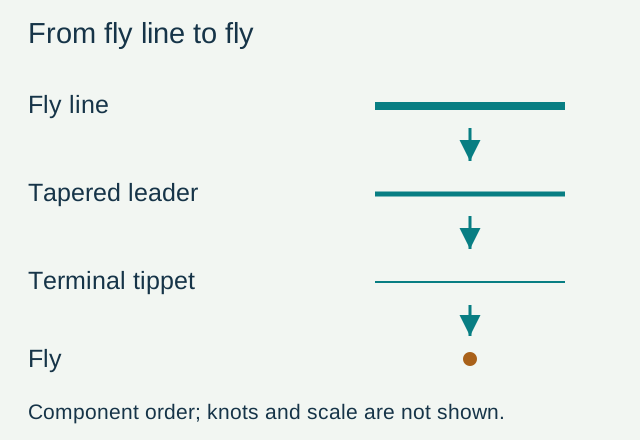
Prepare the connections according to the line and leader instructions, then check them with a gentle pull. Replace damaged tippet. For a different long-leader arrangement with a coloured sighter, see the Euro-nymphing introduction.
How should I prepare a first attempt?
- Check the permit, local rules and clear space behind and overhead. Wear glasses to protect your eyes.
- First explore casting without a hook, using a small piece of yarn on the terminal section where you cannot endanger anyone.
- At the water, choose one permitted presentation and a short casting route. Prepare your net and tools before fishing.
- Inspect the connections and fly after retrieving. Untangle or replace a tangled leader before trying again.
What comes after choosing tackle?
Move to the basic overhead and roll casts, then reading trout water. Choosing a dry fly or nymph is easier when you understand the layer you want to fish. Prepare your unhooking and release routine before a catch.