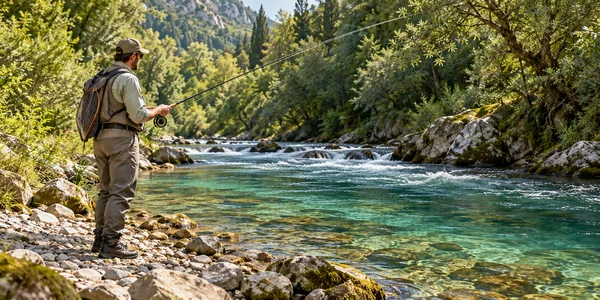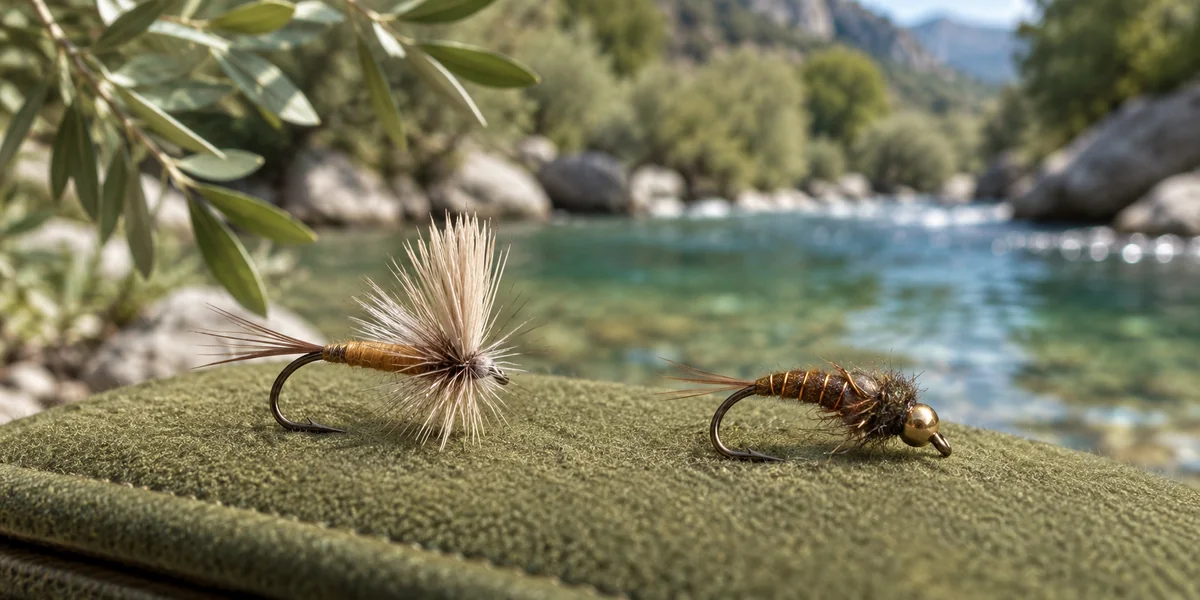
What separates a dry fly from a nymph?
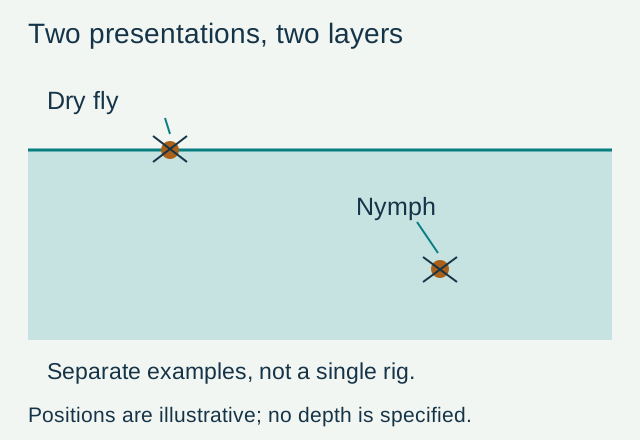
A dry fly is presented on the surface; a nymph is fished below it. Before choosing a pattern, watch where fish are feeding. Repeated rises let you observe the take and plan a dry-fly drift.
When the surface stays quiet, consider current and accessible depth before trying a nymph. No visible rises does not mean fish have stopped feeding; activity below the surface is simply harder to see.
How do I prepare a dry-fly drift?
Observe a repeated feeding position. Choose an approach that avoids unnecessarily laying fly line over the fish, then present the fly so the current carries it towards that area. One orderly first pass is more useful than repeated hurried casts across the same position.
Watch the fly alongside nearby bubbles or particles. If it skates across the flow or leaves an unnatural wake, check leader tension and line placement. Examine the drift before attributing every refusal to the fly’s colour.
What is drag, and how can I reduce it?
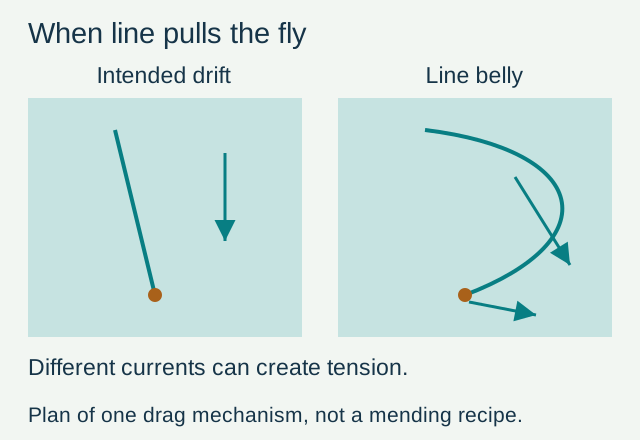
Different current lanes move line at different speeds. A belly in the line can pull the fly away from its intended route: this is drag. First shorten the cast or change position so the line crosses fewer conflicting currents. Repositioning line, or mending, is not always the same upstream motion; a rough correction can move the fly itself.
How is a nymph drift different?
A nymph needs time to enter the intended layer. Control depends on current, weight and presentation method. There is no one weight or countdown for every depth. Initially compare short repeatable drifts, check for snagging and change one variable at a time.
- Choose a current lane and the fly’s entry point.
- Allow entry into the intended layer without immediately pulling it away.
- Follow the available indicator and changes in the drift; bottom contact is not a confirmed bite.
- Retrieve before losing control and inspect the leader and fly.
This introduction concerns presentations intended to follow the current. Deliberately swinging a wet fly across it is a separate approach. Movement under tension is not a mistake in every form of fly fishing.
What should I learn next?
Use reading trout water to select a route. Explore Euro nymphing for short-range work with a visible leader section. Practise the basic cast before attempting more complex line corrections.