Carp Remember the Hook. After Just One Sting.
Read the article
Wild Carp
Cyprinus carpio (Linnaeus)
Divlji šaran
Description
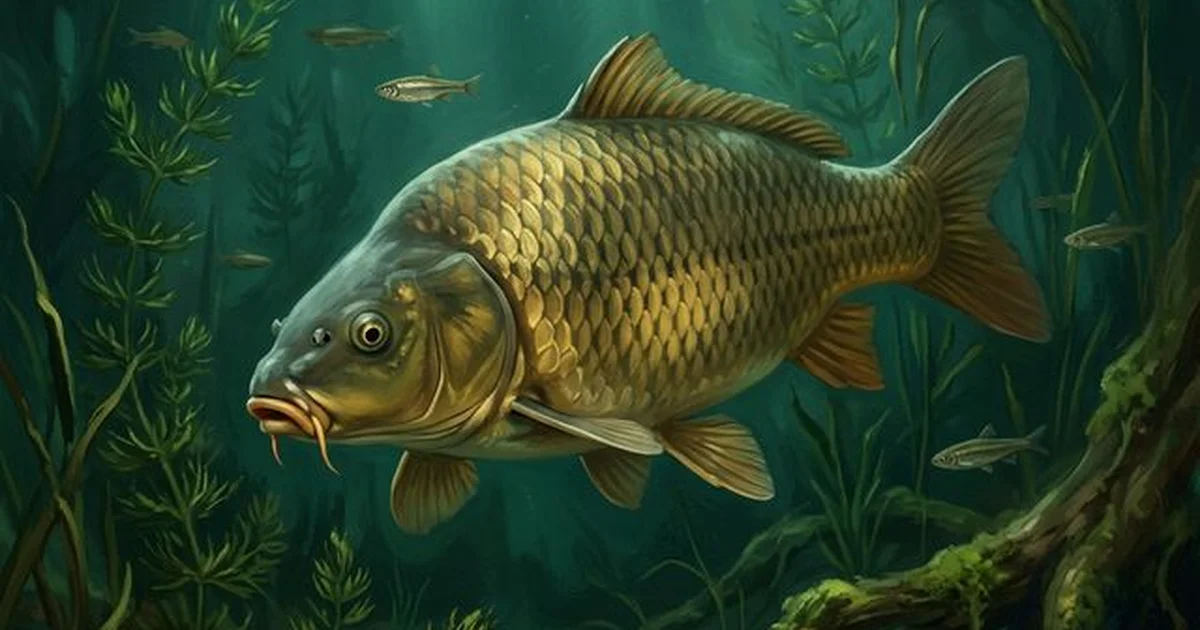
Wild carp is a large freshwater fish from the Cyprinidae family with an elongated body covered in large scales. It has a massive head, protruding lower mouth, and four sensory barbels. Compared to farmed varieties, it has a more slender body and is more resilient. It is naturally distributed in Europe and western Asia, and has been spread almost worldwide through human activity.
Habitat
Inhabits still and slow-flowing waters of lowland areas, such as lakes, backwaters, and slow rivers. Prefers warm waters with rich vegetation and soft bottom. Very tolerant of low oxygen levels, elevated temperatures, and water turbidity.
Diet
Omnivorous, mainly feeding on bottom organisms including insect larvae, worms, mollusks, and crustaceans, as well as plant material such as algae and plant shoots. Juveniles feed on plankton, while adults occasionally consume fish fry and eggs.
Regulations and Responsible Fishing
The closed season is listed as 01.04. - 31.05.. During that period, release the fish immediately and carefully.
The minimum size is 40 cm. Fish below this size should be released immediately.
Always check local association or concession holder rules before fishing, because they may be stricter than this general overview.
🎣 Recommended Bait
- Corn (boiled or fermented)
- Boilies (sweet, fishy, or fruity)
- Tiger nuts
- Pellets
- Worms (earthworms)
- Larvae
- Flavored dough
📅 Best Seasons
Spring (after closed season - June), Summer (peak activity), Early autumn (aggressive feeding)
🕐 Best Time of Day
Early morning (dawn - most active), Late afternoon, Dusk and first half of night
📍 Where to Fish
Look for it along reed edges, near submerged trees, and in areas with muddy bottom. Prefers quiet bays, backwaters, and sheltered areas. Often stays at depths of 2-4 meters, in summer in deeper cooler layers (up to 8m). Particularly active around feeding spots.
How to catch: Wild Carp
Carp is very cautious and has an extremely developed sense of smell. Always use pre-baiting 1-2 days before fishing in the same spot. Hair rig with boilies is most effective for larger specimens. Fish completely quietly as carp feel vibrations. Best results are with stable atmospheric pressure, warm weather without wind, and after rain when water becomes slightly turbid.